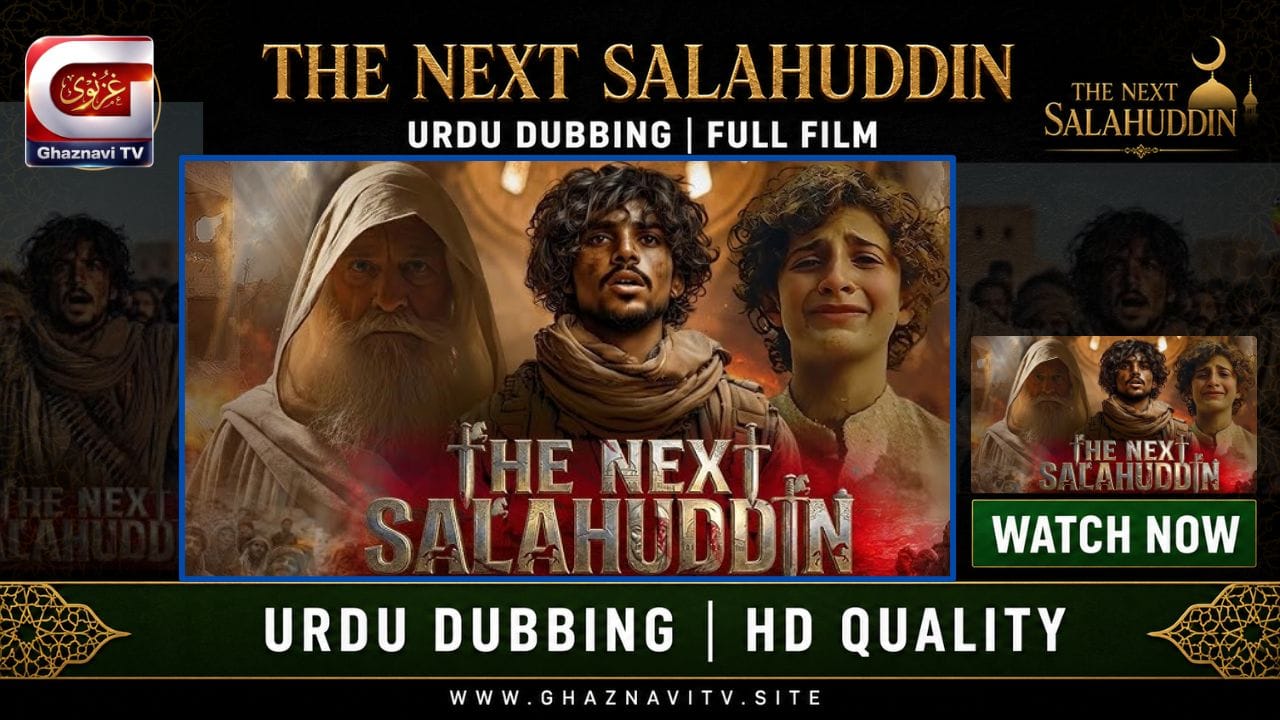

The Next Salahuddin Urdu Dubbing is now streaming free on Ghaznavi TV. This film does not begin with a hero. It begins with a child sitting inside the ruins of everything he loved — and asks the question that nobody in this film can stop thinking about: what does a person become when the world takes everything from them, and they choose to rise anyway?
Watch The Next Salahuddin

Why The Next Salahuddin Urdu Dubbing Feels Unlike Anything You Have Seen Before
Most films about war and its aftermath follow a predictable emotional path. They show suffering, they show survival, and they build toward some form of resolution that offers the audience a way to exhale. The Next Salahuddin Urdu Dubbing does something fundamentally different. It begins with suffering — raw, specific, personal suffering — and then asks a question that the rest of the film spends its entire running time attempting to answer: what is the correct response to injustice at this scale, and who gets to decide?
That question has no easy answer. And the film’s refusal to offer one is not a weakness — it is the source of its power. By the time the story of Yousuf reaches its conclusion, you are not simply moved by what happened to him. You are thinking about what it means. You are carrying the question home with you. And that experience — a film that stays with you as a question rather than resolving neatly into an answer — is genuinely rare and genuinely valuable.
A Story That Was Made Possible by New Technology but Driven by Ancient Feeling
The Next Salahuddin Urdu Dubbing is entirely AI-generated — every scene, every landscape, every character rendered through artificial intelligence rather than traditional filmmaking. This is remarkable as a technical achievement. But what is more remarkable is that the technology has been put entirely in service of a story with deep emotional and spiritual roots — roots that go back not just to the life of Salahuddin Ayyubi in the 12th century, but to the long, painful, ongoing relationship between the Muslim world and the land of Palestine.
The AI handles the visuals. The meaning comes from somewhere much older. And on Ghaznavi TV, with Urdu dubbing that brings every line of dialogue into the linguistic home of South Asian Muslim audiences, that meaning arrives with full force.The Next Salahuddin Urdu Dubbing
What Makes This Film Groundbreaking Beyond Its Technology
Films about Palestinian suffering are not new. Films about Muslim unity are not new. What is genuinely new in The Next Salahuddin Urdu Dubbing is the specific combination it achieves — taking a real, contemporary, ongoing tragedy and embedding it inside an epic narrative structure that gives it the scale and the moral weight it actually deserves. This film does not treat the story of Gaza as a news event to be documented. It treats it as the beginning of a story whose full meaning has not yet been written — and it invites its audience to consider what role they might play in how that story continues.
Why Watching This Film Is an Active Experience, Not a Passive One
Unlike films that do your emotional processing for you — that tell you when to feel sad, when to feel hopeful, when to feel resolved — The Next Salahuddin Urdu Dubbing leaves significant space for the audience’s own response. It presents Yousuf’s journey with clarity and emotional honesty, but it does not prescribe what you are supposed to take away from it. Different viewers will bring different things to this film — different levels of knowledge about Palestine, different relationships to the idea of Muslim unity, different understandings of what Salahuddin represents — and the film is rich enough to meet all of them.
Yousuf – A Child Whose Grief Becomes the Seed of Something Greater
At the absolute center of The Next Salahuddin Urdu Dubbing is Yousuf — and the film earns every moment of the journey it takes him on by first making us understand exactly who he is before the war fully takes hold of his life. He is a child. Specifically, entirely, unmistakably a child — with the small concerns and ordinary joys and unguarded expressions that belong only to childhood. The film gives him this humanity deliberately, because it knows that without it, everything that follows would carry only half its weight.

What happens to Yousuf at the film’s beginning is not softened. It is shown with the kind of honesty that respects both the reality it is depicting and the audience watching it. Loss in this film is not a narrative device. It is a lived experience — and the film takes the time to let you feel the full specific weight of what Yousuf loses before it begins to show you what he does with that loss.
The Specific Quality of a Child’s Grief
One of the things that distinguishes the portrayal of Yousuf’s grief in The Next Salahuddin Urdu Dubbing from more conventional depictions of loss in epic films is its specificity. This is not generalized sorrow. It is the particular, bewildered, physically overwhelming grief of a child who has not yet developed the emotional vocabulary or the psychological distance to process what has happened to him.
Children do not grieve the way adults do. They do not move through neat stages toward acceptance. They oscillate — between devastation and a kind of stunned normalcy, between the full reality of what has happened and a mind that simply cannot hold that reality continuously. The film captures this oscillation with genuine accuracy, and it is one of the most emotionally honest things it does.
The Person Grief Is Beginning to Shape
What The Next Salahuddin Urdu Dubbing shows, with patience and without rushing the process, is that grief of this magnitude does not simply wound a person. It also, if the person survives it with their essential character intact, begins to shape them in specific ways. Yousuf’s grief is making him something. The film is careful not to say too early what that something is — but it plants the seeds clearly enough that when the transformation begins to become visible, it feels earned rather than imposed.
Why Yousuf Resonates With Muslim Audiences Everywhere
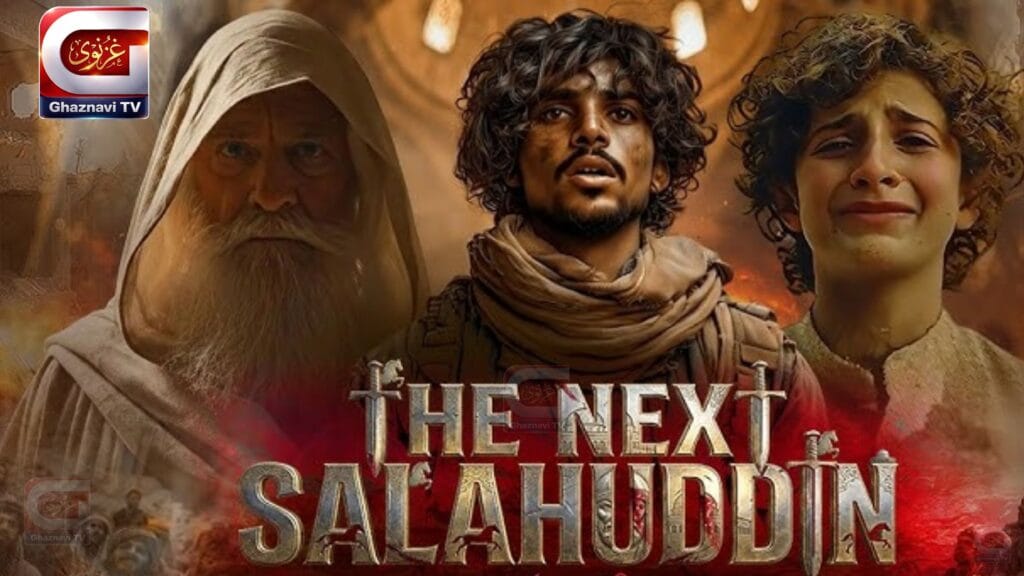
For Muslim audiences watching The Next Salahuddin Urdu Dubbing on Ghaznavi TV, Yousuf is not simply a fictional character. He represents something — the millions of real children whose lives have been interrupted, damaged, or ended by the conflict in Gaza and the broader Palestinian situation. Watching his story is not escapism. It is a form of witnessing — of choosing to see clearly something that is very easy to look away from. That act of witnessing is itself meaningful, and the film understands this.
Gaza as the Beginning – A Setting That Refuses to Be Just a Backdrop
In many films set during conflicts, the location functions primarily as atmosphere — a collection of visual elements that communicate “war zone” without being specific to any actual place. The Next Salahuddin Urdu Dubbing does not make this mistake. Gaza in this film is specific. It has the particular quality of a real place that has been lived in and loved — narrow streets, the specific blue of the Mediterranean in the distance, the way light falls on old stone — before it has those specific qualities violated by the specific mechanics of modern warfare.
This specificity is important for the same reason that Yousuf’s specific childhood is important: it establishes that what is being lost has real value before it is lost. The Gaza of The Next Salahuddin is not a symbol of suffering. It is a place — a home — and the film insists on showing you that before it shows you what happens to it.
The Rawness of the Opening Scenes
The opening sequences of The Next Salahuddin Urdu Dubbing are among the most emotionally demanding in the film — and they are demanding in a very specific way. They do not use music to tell you how to feel. They do not cut away at the crucial moments. They simply show what is there, with the kind of unflinching respect for reality that the subject demands.
This rawness in the opening scenes serves a crucial narrative function: it establishes the baseline of pain from which Yousuf’s entire subsequent journey rises. Everything that comes after — every step of his transformation, every act of leadership, every moment of the epic mission that consumes his adult life — is measured against what he saw and felt and lost in Gaza. The film never lets you forget where it began.
Gaza as a Symbol and as a Reality Simultaneously
One of the more sophisticated things The Next Salahuddin Urdu Dubbing achieves is holding Gaza simultaneously as a real specific place and as a symbol of something larger — the ongoing dispossession of a people, the particular form of suffering that occupation produces, the gap between the world’s stated values and its actual responses. The film does not have to explain this symbolic dimension. It simply shows the reality clearly enough that the symbolic weight accumulates naturally.
What the Choice of Gaza as a Starting Point Communicates
By beginning Yousuf’s story specifically in Gaza rather than in a generic conflict zone, The Next Salahuddin Urdu Dubbing makes a choice with significant moral weight. It says: this story is about a real situation involving real people, and the film intends to honor that reality rather than use it as mere dramatic fuel. That intention shapes everything that follows — the care with which Yousuf’s character is developed, the seriousness with which his mission is treated, and the genuinely meaningful nature of where the film’s journey ultimately leads.
What Loss Does to a Person – And the Specific Thing It Can Become
There is a version of this story that could easily have been made — a story where Yousuf’s loss simply produces rage, and that rage produces a warrior, and the warrior achieves the film’s epic goals through sheer force of anger. The Next Salahuddin Urdu Dubbing is not that film. It is interested in something more complicated and more honest: the question of what loss actually does to a person over time, and specifically what it does when the person it happens to has the particular combination of qualities that Yousuf has.
Loss, in this film, is not fuel. It is weight — weight that either crushes or develops the person carrying it, depending on what resources they can draw on and what choices they make about how to carry it. Yousuf’s journey through his grief is not linear and it is not triumphant in any simple sense. There are periods where the weight is winning. There are moments of genuine crisis where the future is genuinely uncertain. And the film does not smooth these moments over.
The Danger of Letting Grief Become Only Anger
One of the most honest things The Next Salahuddin Urdu Dubbing acknowledges is the genuine danger of allowing a loss this large to become purely anger. Anger after injustice is legitimate — the film does not pretend otherwise. But anger without wisdom, anger without the discipline that comes from understanding rather than simply feeling, anger that has no direction other than opposition — this kind of anger does not produce the Salahuddin that the film’s title promises. It produces something smaller and ultimately less effective.
Yousuf must find his way through anger to something more durable. And the film takes the time to show that navigation honestly — including the moments when anger seems like the only available response and the restraint required to choose differently is genuinely costly.
Faith as the Container That Holds Everything Together
The element that prevents Yousuf’s grief and anger from becoming simply destructive — in the film’s telling — is his faith. Not faith as a slogan or a performance, but faith as an actual lived relationship with something larger than the immediate situation. His understanding of his suffering as part of a larger story — one that began before he was born and will continue after he is gone — gives him a framework that anger alone cannot provide.

This dimension of The Next Salahuddin Urdu Dubbing will resonate deeply with Muslim viewers who have their own understanding of what it means to find meaning in suffering through an Islamic framework — the tradition of sabr (patience), of tawakkul (trust in Allah), of understanding that what appears as loss may be, in a larger view, a form of preparation.
What the Film Says About the Relationship Between Pain and Purpose
The central argument of The Next Salahuddin Urdu Dubbing — if it can be said to have one — is that the pain of profound loss does not have to be meaningless. That the specific quality of the pain Yousuf carries can, under the right conditions and with the right choices, become the specific quality of the strength that makes him capable of doing what needs to be done. Not despite his loss. Partly because of it — because of what it taught him about what actually matters, and what it stripped away that was never as important as he had thought.
The Awakening – When Grief Stops Consuming and Starts Directing
There is a specific moment in The Next Salahuddin Urdu Dubbing when something shifts in Yousuf — when grief, which has been the primary weather of his inner life since the film’s beginning, begins to become something else. It is not a dramatic conversion moment or a sudden burst of inspiration. It is quieter than that, and more durable: a gradual reorientation of everything he feels toward a purpose that is larger than his own pain.
The film earns this awakening by not rushing it. Yousuf’s grief has been shown honestly enough, and has been given enough time, that when it begins to transform into something more active and directed, the transformation feels genuine rather than convenient. He is not healed. He is not free of pain. He has simply found a use for it — a direction in which to point the energy that grief generates when it does not consume itself.
Leadership That Comes From Understanding, Not Just Feeling
The specific form that Yousuf’s awakening takes in The Next Salahuddin Urdu Dubbing is important: it is not primarily an awakening of anger or even of courage. It is an awakening of understanding. He begins to see — with a clarity that his personal experience has made possible — what the actual problem is, and what an actual response to that problem would need to look like. And what he sees is that the problem is not primarily military. It is spiritual. It is about the disconnection between what Muslims believe and how they live, between the unity that their faith calls them to and the fragmentation that their politics and histories have produced.
This understanding — that the path to Masjid-e-Aqsa runs through the hearts of Muslims before it runs through any battlefield — is the intellectual and spiritual core of Yousuf’s mission. And it is what makes him a potential Salahuddin rather than simply a warrior.
The Moment the Film’s Scale Expands
After Yousuf’s awakening, The Next Salahuddin Urdu Dubbing expands in scale dramatically — moving from the intensely personal world of one boy’s grief to the vast, global landscape of Muslim communities across multiple continents. This expansion is visually magnificent — one of the places where the AI filmmaking truly earns its place — but it is also emotionally earned. We have been with Yousuf in his smallest moments. Now we follow him into the largest ones. And because we know him, the large-scale mission carries personal weight that spectacle alone could never generate.
Why This Awakening Feels Different From Conventional Hero Origin Stories
Most epic hero narratives produce their central figure’s awakening through a single traumatic event that cleanly transforms them from ordinary person to extraordinary leader. The Next Salahuddin Urdu Dubbing is more honest than this. Yousuf’s awakening is a process — slow, non-linear, sometimes reversed, sometimes uncertain. He has days where the purpose feels clear and days where it does not. He has moments of genuine doubt about whether any of this is possible. The film shows all of these — and in doing so, creates a protagonist whose eventual confidence carries the full weight of everything he worked through to earn it.
The Mission to Unite Muslims – Why It Is the Hardest Thing the Film Imagines
The mission that The Next Salahuddin Urdu Dubbing places at the center of Yousuf’s adult life is not military conquest. It is Muslim unity — and the film is honest enough about the current state of the Muslim world to treat this mission with the difficulty it deserves. Unity among a global community of 1.8 billion people, divided by language, culture, geography, sect, politics, and historical grievance, is not achieved by a speech or a gesture. It is a project of extraordinary difficulty that requires extraordinary patience, extraordinary wisdom, and the willingness to face opposition that comes not just from outside the community but from within it.
Yousuf understands this. And the film follows him through the genuine difficulty of the work — through the conversations that go nowhere, the alliances that form and then fracture, the moments where the scale of what needs to change seems completely beyond any individual’s capacity to affect. These are not dramatic setbacks in a conventional narrative sense. They are the honest texture of a genuinely difficult mission being attempted by a genuinely serious person.
Challenging Systemic Oppression – The Political Dimension
Alongside the internal challenge of Muslim unity, The Next Salahuddin Urdu Dubbing confronts the external challenge of systemic oppression — the structures of international power that have maintained the Palestinian situation as it currently exists, and that benefit, in various ways, from its continuation. Yousuf’s mission must engage with these structures as well as with the internal divisions of the Muslim community. And the film shows this engagement honestly — including the ways in which political courage and strategic intelligence are as necessary as spiritual depth for the kind of change Yousuf is working toward.
The Specific Quality of Leadership This Mission Requires
What the film shows, through Yousuf’s developing leadership, is that the kind of unity he is seeking cannot be compelled or commanded. It can only be invited — through the quality of the example you set, through the consistency of your commitment to values that people across different backgrounds can recognize as genuine, through the patience to stay with a mission that shows limited visible progress for long stretches of time. This is a portrait of leadership that is honest about how slow and difficult genuine change actually is. And it is all the more powerful for that honesty.
Why Muslim Unity Is the Film’s Most Radical Idea
In a global media environment where Muslim fragmentation is often taken for granted — where division between communities, between sects, between nations is treated as the permanent natural state of things — the simple idea at the heart of The Next Salahuddin Urdu Dubbing is genuinely radical: that unity is possible, that it has historical precedent, and that it begins not with political agreements but with individual people choosing to see each other as brothers and sisters before they see each other as anything else. That idea, presented with the full weight of Yousuf’s story behind it, carries far more force than any political argument could.
Table of Contents
The Salahuddin Connection – A Name That Carries Centuries of Meaning
The title of this film — The Next Salahuddin Urdu Dubbing — invokes one of the most significant figures in Islamic history: Salahuddin Ayyubi, who in 1187 CE recaptured Jerusalem from the Crusaders and restored Muslim access to Masjid-e-Aqsa after nearly ninety years of Crusader control. His achievement was not simply military. It was the result of decades of patient political work, the painstaking unification of fragmented Muslim territories under a shared purpose, and the development of a leadership style grounded in justice, mercy, and strategic intelligence rather than simple force.
By naming its protagonist in relation to Salahuddin, the film is making a specific argument: that what the current situation requires is not just any kind of response, but the specific kind of response that Salahuddin modeled — one grounded in patient unity-building, in justice as a governing principle, and in the understanding that the moral dimension of a cause ultimately determines its sustainability.
What Made Salahuddin Different From Other Conquerors
The historical Salahuddin’s recapture of Jerusalem in 1187 CE was notable not just for its military achievement but for the specific way it was conducted. Unlike the Crusader conquest of Jerusalem in 1099, which was accompanied by mass killing of the city’s population, Salahuddin’s conquest was characterized by mercy — Christians and Jews were allowed to leave safely, and the city was treated with a restraint that historians across different traditions have recognized as extraordinary for its era.
This quality — the insistence on justice even in victory, on mercy as a form of strength rather than weakness — is what the film is asking its central character, and implicitly its audience, to embody. The Next Salahuddin Urdu Dubbing is not simply naming a desired political outcome. It is naming a desired character.
Why This Comparison Matters Now
The decision to frame Yousuf’s story explicitly in relation to Salahuddin is a decision with significant contemporary weight. It says: the path forward is not through rage or revenge but through the specific qualities that produced the most significant Muslim achievement in relation to Jerusalem and Palestine in the last millennium. It is a call to a specific kind of greatness — one that is available to anyone who chooses to develop it.
The Historical Salahuddin as a Guide for the Present
For Muslim audiences watching The Next Salahuddin Urdu Dubbing on Ghaznavi TV, the figure of Salahuddin Ayyubi carries deep personal resonance. He is not simply a historical figure — he is a symbol of what is possible when Muslims act from their best values rather than their worst impulses, when they build unity rather than exploit division, when they pursue justice as a genuine commitment rather than as a rhetorical position. The film’s invocation of his name is an invitation to take that symbol seriously — to ask what it would actually require to deserve it.
Masjid-e-Aqsa – The Destination That Gives the Entire Journey Its Purpose
Throughout The Next Salahuddin Urdu Dubbing, Masjid-e-Aqsa functions as more than a destination. It is the point toward which everything in the film is oriented — the specific, physical, irreplaceable place whose significance to Muslim spiritual life and historical identity gives Yousuf’s entire mission its deepest meaning.
For Muslim viewers, Masjid-e-Aqsa requires no explanation. It is the first qibla of the Muslim ummah. It is the site of the Isra and Mi’raj — the night journey and ascension of Prophet Muhammad, peace be upon him. It is the third holiest site in Islam. Its current status — restricted access for Muslim worshippers, ongoing pressures on its physical integrity — is a source of genuine grief and concern for Muslims everywhere. The film’s choice to make the raising of the Palestinian flag over this specific site the culmination of Yousuf’s journey is therefore not arbitrary. It is the most meaningful possible destination for a story that begins in Gaza.
The Difference Between a Symbol and a Reality
What The Next Salahuddin Urdu Dubbing handles carefully is the relationship between Masjid-e-Aqsa as a spiritual symbol and as a physical reality. These two dimensions are not in competition — but they do require different things. Honoring the symbolic significance of the site means understanding why it matters so profoundly. Honoring its physical reality means acknowledging that the actual conditions affecting actual worshippers at the actual location are a matter of genuine human rights and justice, not merely of religious sentiment.
The film holds both dimensions simultaneously — which is one of the things that makes it more than simply a story about a symbol. It is a story about a real place, a real community, and the genuine possibility of a different future for both.
The Final Scene – Hope Without False Certainty
The conclusion of The Next Salahuddin Urdu Dubbing — the moment when the film’s central promise is fulfilled — is handled with the restraint and emotional honesty that characterizes the best moments of the entire production. It does not feel like a fairy tale ending. It feels like a statement of possibility — a demonstration that the outcome Yousuf has been working toward is not merely a dream, and that the path that leads there is real, demanding, and available to anyone willing to walk it.
Why This Ending Matters for the Audience Beyond the Film
The most powerful endings in cinema do not resolve everything — they change the way you look at the world outside the cinema. The Next Salahuddin Urdu Dubbing aims for exactly this kind of ending: one that sends you out of the viewing experience not simply moved, but activated — with a clearer sense of what matters, what is possible, and what your own small piece of the larger story might look like.
The AI Filmmaking – What It Actually Means for This Story
The Next Salahuddin Urdu Dubbing is an entirely AI-generated film — and this fact deserves honest engagement rather than either uncritical celebration or reflexive dismissal. AI filmmaking at this level is genuinely new. It makes possible things that were previously either impossible or prohibitively expensive: hyper-realistic battle sequences depicting historical and futuristic scenarios, vast landscapes of the Middle East rendered with cinematic beauty, character close-ups capable of expressing genuine emotional nuance.
For a story like this one — a story that needs to move between intimate personal grief and vast epic scale, between the specific streets of Gaza and the sweeping landscapes of the broader Muslim world — these capabilities are not just technically interesting. They are narratively essential. The story this film wants to tell simply could not have been told, at this scale and with this ambition, through conventional filmmaking with any realistic budget.
📌 Quick Facts About the Film’s AI Production
Production: 100% AI-generated — no live action footage
Visual Style: Hyper-realistic — designed to feel cinematic rather than artificial
Scale: Moves from intimate personal scenes to large-scale battle and landscape sequences
Dubbing: Available in Urdu on Ghaznavi TV for South Asian audiences
The Question of What AI Can and Cannot Do
The honest answer to the question of what AI filmmaking can and cannot do is that its capabilities are expanding rapidly — but its current strengths and limitations are both visible in The Next Salahuddin Urdu Dubbing. What it does exceptionally well: creating environments of extraordinary visual richness, rendering large-scale scenes with a coherence and beauty that would require enormous resources to achieve practically, and producing character visuals with genuine expressiveness. Where it faces challenges: the specific texture of human performance that comes from lived experience, the improvisational quality of genuine emotion, the indefinable quality of presence that human actors bring.
The film navigates these limitations thoughtfully — working with what AI does best while structuring its story in ways that make those best qualities central to the experience.
Why This Matters Beyond This Specific Film
The Next Salahuddin Urdu Dubbing represents something genuinely significant in the history of Islamic and Muslim storytelling: the possibility of producing epic, ambitious, visually magnificent cinema about Muslim history and Muslim aspirations without the gatekeeping of major production studios that have historically shown limited interest in these stories. AI filmmaking democratizes the telling of stories that matter — and this film is a meaningful early demonstration of what that democratization can produce.
What This Film’s Existence Says About Where We Are
The fact that a film like The Next Salahuddin exists — that it could be made, that it could be distributed, that it can be watched with Urdu dubbing on Ghaznavi TV by millions of South Asian viewers — is itself a statement about the current moment in Islamic cultural production. Stories that the mainstream film industry would not fund, stories that require a level of political and moral seriousness that commercial cinema often finds inconvenient, can now be told. That is a significant development, whatever one thinks of any individual film’s specific choices.
The Visual World of the Film – Cinematic Beauty That Never Forgets What It Is Serving
Whatever conversations surround its production method, The Next Salahuddin Urdu Dubbing is an undeniably beautiful film to watch. The visual language it employs — the way it photographs Gaza, the way it renders the landscapes of the Middle East, the way it handles the scale of its battle sequences and the intimacy of its close-up character moments — is consistently cinematic in the best sense: every visual choice serves the emotional and narrative purpose of the scene rather than existing for its own sake.
The sweeping landscape sequences, in particular, achieve something genuinely moving: they remind you of the specific beauty of the land at the center of this story — the ancient olive groves, the golden stone of old cities, the light on water — and in doing so, they communicate why this land matters beyond politics and beyond religion. It is beautiful. It has been home. And the film’s visual celebration of that beauty is itself a form of witness to what is at stake.
The Battle Scenes – Epic Without Losing the Human Scale
The large-scale battle sequences in The Next Salahuddin Urdu Dubbing are visually extraordinary — and the film is disciplined enough to ensure they never become purely spectacle. Even in the largest sequences, the film finds its way back to the human scale — to the specific experience of specific people in the middle of events larger than any individual can fully comprehend. This discipline keeps the battle scenes from becoming emotionally numbing, which is the primary failure mode of purely spectacle-driven epic filmmaking.
Character Close-Ups That Carry Genuine Emotional Weight
Among the visual achievements of The Next Salahuddin Urdu Dubbing that deserve specific recognition are its character close-ups — moments where the camera simply stays on a face and asks the audience to read what is happening in it. These moments require the AI’s character rendering to be emotionally expressive enough to carry significant dramatic weight, and in most cases, the film succeeds. The specific quality of Yousuf’s expressions across the film’s emotional arc — the grief of the early sequences, the uncertainty of the middle section, the hardened clarity of the later episodes — is handled with genuine skill.
Visual Language That Reflects the Film’s Spiritual Dimension
One of the more subtle visual achievements of The Next Salahuddin Urdu Dubbing is the way its cinematographic choices reflect the film’s spiritual dimension. Light in this film is not simply technical — it is often used in ways that carry symbolic weight, that mark transitions in Yousuf’s inner journey, that distinguish between the world as it is and the world as it could be. This use of visual language to carry meaning beyond the literal is one of the marks of genuine filmmaking ambition — and the film earns it.
Watch The Next Salahuddin With Urdu Dubbing Free on Ghaznavi TV
The Next Salahuddin Urdu Dubbing is available right now — completely free — on Ghaznavi TV at www.ghaznavitv.site. HD quality, clear and expressive Urdu dubbing, smooth streaming on any device. No registration required. No payment. Just the film, whenever you are ready to watch it.
This is the kind of film that deserves to be seen widely — not because it will make you feel better about the situation it depicts, but because it will make you think more clearly and feel more honestly about what that situation means and what a genuine response to it might look like.
🌐 Watch Free Now: www.ghaznavitv.site | The Next Salahuddin Urdu Dubbing | HD | Free Streaming
What is The Next Salahuddin Urdu Dubbing about?
The Next Salahuddin follows Yousuf, a young boy from Gaza whose life is shattered by war. The film traces his journey from profound personal loss through a gradual awakening of leadership, a mission to unite Muslims globally, and ultimately the fulfillment of a historic destiny centered on Masjid-e-Aqsa. It is simultaneously an intimate personal story and an epic political and spiritual narrative.
Where can I watch The Next Salahuddin Urdu Dubbing for free?
Watch it completely free on Ghaznavi TV at www.ghaznavitv.site. HD quality with clear Urdu dubbing — no account or payment needed.
Is The Next Salahuddin an AI-generated film?
Yes. Every visual element of The Next Salahuddin — every scene, character, landscape, and battle sequence — was created entirely through artificial intelligence. It is one of the most ambitious AI-generated films produced for a Muslim and Islamic historical audience, combining hyper-realistic visuals with a deeply meaningful story about Palestinian struggle and Muslim unity.
Who was Salahuddin Ayyubi and why is the film named after him?
Salahuddin Ayyubi — known in the West as Saladin — was the Muslim leader who recaptured Jerusalem from the Crusaders in 1187 CE, restoring Muslim access to Masjid-e-Aqsa after nearly ninety years. He is remembered not just for his military achievement but for his justice, mercy, and the Muslim unity he built over decades of patient work. The film’s title suggests that Yousuf’s mission — to unite Muslims and restore Palestinian rights over Masjid-e-Aqsa — requires the same qualities that Salahuddin embodied.
The Next Salahuddin Urdu Dubbing
The Next Salahuddin Urdu Dubbing
The Next Salahuddin Urdu Dubbing
The Next Salahuddin Urdu Dubbing
The Next Salahuddin Urdu Dubbing
The Next Salahuddin Urdu Dubbing
The Next Salahuddin Urdu Dubbing
The Next Salahuddin Urdu Dubbing
The Next Salahuddin Urdu Dubbing
The Next Salahuddin Urdu Dubbing