

Ibn Sina Episode 7 Urdu Dubbed is now streaming free on Ghaznavi TV. With three episodes remaining in Season 1, the series arrives at exactly the kind of moment that separates good storytelling from genuinely great storytelling — the moment when everything built across six careful episodes is now fully available to the story, and the story is finally able to use all of it. Episode 7 is where that use becomes visible in its fullest and most rewarding form.
Watch Ibn Sina Episode 7 Urdu Dubbed

TABLE OF CONTENT
Table of Contents
Why Ibn Sina Episode 7 Urdu Dubbed Represents Season 1 at Its Most Fully Realized
Ibn Sina Episode 7 Urdu Dubbed occupies a position in the season’s arc that is structurally significant and dramatically powerful: it is the third episode of the second half, the point where the momentum of the season’s final phase is fully established and the destination is clearly visible. With three episodes remaining, the story is no longer building toward something — it is arriving at it. And the quality of that arrival, visible in every dimension of Episode 7, confirms that the six episodes of groundwork were exactly as necessary as they seemed.
What specifically distinguishes Episode 7 from its predecessors is not a single dramatic escalation or a particularly spectacular scene. It is a quality of fullness — the feeling that everything the series has been developing is now simultaneously present and simultaneously active. Young Sina in Episode 7 is not demonstrating one or two of his capabilities. He is being fully himself, with everything that entails, in a situation that genuinely requires all of it. And watching this full expression of who he has become is one of the most genuinely satisfying experiences the series has offered.
The Specific Weight That Episode 7 Carries
By the time a viewer arrives at Ibn Sina Episode 7 Urdu Dubbed on Ghaznavi TV, they have invested six episodes of careful attention in this character and this world. That investment has accumulated into something real — genuine emotional and intellectual engagement with a specific person in a specific situation, whose development has been shown with enough honesty and specificity to create actual caring about what happens to him next.
Episode 7 carries the weight of that accumulated investment — and it honors it. Every development it depicts feels earned by what preceded it. Every challenge it places before young Sina feels genuinely calibrated to who he is now, not to a generic version of a gifted child. The episode is specific in the way that only careful storytelling over time can produce — and that specificity is both its greatest achievement and its greatest reward for patient viewers.
How Episodes 6 and 7 Work Together
If Episode 6 was the episode that opened the second half by establishing that young Sina’s various capacities had reached a new level of integration, Episode 7 is the episode that shows that integration operating under the kind of genuine pressure that tests whether integration is real or merely apparent. The question Episode 6 raised — whether what had been developed could hold together under serious challenge — is answered in Episode 7 with a clarity and a confidence that makes the answer feel not just satisfying but genuinely important.

What This Means for the Final Three Episodes
The specific thing that Ibn Sina Episode 7 Urdu Dubbed does for the series’ final three episodes is establish a new quality of expectation — a baseline of fully realized character and fully integrated capability from which the closing chapters can build without needing to prove anything that has already been proven. Episodes 8, 9, and 10 will take young Sina into the specific situations that the season has been building toward. Episode 7 has established that he is ready for them.
Observation That Has Become So Natural It Is Now Simply How He Exists in the World
One of the most specific and most meaningful developments visible in Ibn Sina Episode 7 Urdu Dubbed is in the quality of young Sina’s observation — not in what he notices, which has always been remarkable, but in how he notices it. By Episode 7, his careful attentiveness to the world around him has completed a transformation that began in the early episodes: it has become genuinely automatic. It is no longer a practice he applies when needed. It is simply how he inhabits the world at every moment.
This automaticity — the point where a disciplined practice becomes a natural way of being — is one of the most important thresholds in any form of skill development. Before it, the practice requires conscious effort and deliberate choice. After it, it is available without cost — a continuous background activity that processes everything encountered without requiring any of the cognitive resources that conscious attention demands.
What Automatic Observation Makes Possible
The specific consequence of young Sina’s observation becoming automatic in Ibn Sina Episode 7 Urdu Dubbed is that it frees his conscious attention for the work of interpretation and synthesis — for the higher-order intellectual operations that his developing capabilities are now ready to perform. He does not have to choose between observing carefully and thinking carefully. Both happen simultaneously, each feeding the other in real time.
This integration of observation and interpretation — the point where seeing something and beginning to understand it happen together rather than sequentially — is visible in Episode 7 in the specific speed and depth with which young Sina engages with the situations he encounters. He does not take notes and then think about them. He thinks as he observes, and the thinking shapes what he observes next. This is genuinely sophisticated intellectual operation — and it is now simply how he works.
What He Sees in Episode 7 That Others Still Cannot
The specific things that young Sina notices in Ibn Sina Episode 7 Urdu Dubbed that the trained adults around him continue to miss are chosen with the same developmental precision that has characterized the series throughout. They are not simply more numerous or more detailed than what others notice. They are more revealing — they carry more informational weight about what is actually happening — because they are selected by a sensory-cognitive system that has been trained, across seven episodes of continuous development, to know what to look for.
The Long Path From Episode 1’s Observation to Episode 7’s
The contrast between young Sina’s observation in Episode 1 and his observation in Ibn Sina Episode 7 Urdu Dubbed is one of the most concrete expressions of the season’s developmental arc. In Episode 1, his observation was remarkable primarily for its breadth — he noticed more things than others did. In Episode 7, it is remarkable for its depth and its integration — he not only notices more, but understands more of what he notices, and uses that understanding immediately in service of whatever he is trying to accomplish. This development is the most visible evidence of who he is becoming.
Investigating Illness With a Mind That Is Beginning to Think Like a Future Physician
The medical dimension of Ibn Sina Episode 7 Urdu Dubbed has reached a point that is genuinely and specifically remarkable: young Sina is now approaching illness with the conceptual framework of a future physician rather than with the curiosity of an intelligent child. The difference is not simply one of knowledge — though his medical knowledge has expanded considerably across seven episodes. It is a difference in how he organizes and applies what he knows.
A curious child approaches illness by asking what is happening. A physician’s mind asks something more complex: what mechanism is producing what is happening, and what does the answer to that question imply about what should be done? Young Sina in Episode 7 is asking the physician’s questions — not because he has been taught to, but because his developing understanding of the body as a system has made those questions the natural expression of how he now thinks about medical situations.
The Specific Medical Challenge Episode 7 Presents
The illness investigation at the center of Ibn Sina Episode 7 Urdu Dubbed is designed, with evident intentionality, to require exactly the level of medical thinking that young Sina has reached by this point in the season. It is not a simple pattern-recognition challenge — not the kind of medical puzzle that experience alone could solve. It is a situation that requires genuine understanding of why the body behaves as it does, what the specific mechanisms are that produce the visible symptoms, and what that understanding implies about what would actually help the person suffering.

The challenge pushes young Sina to the edge of what his current understanding can handle — and then just slightly beyond it, requiring him to extend his framework rather than simply apply it. This extension, performed in real time under genuine pressure, is one of the most impressive intellectual performances the series has depicted — and it is also the most medically sophisticated.
When His Medical Insight Actually Changes an Outcome
One of the things that Ibn Sina Episode 7 Urdu Dubbed handles with particular care is the translation of young Sina’s medical insight into practical consequence — the moment when what he understands about what is happening is converted into action that actually changes the situation for the better. This translation is never simple, even when the understanding is correct. It requires the ability to communicate what you know in ways that others can act on, to navigate the social dynamics of suggesting a different approach when experienced practitioners are already engaged, and to hold to your assessment with appropriate confidence under conditions where that confidence is not yet externally validated.
The Seeds of the Canon of Medicine Visible in Episode 7
For viewers who know the historical Ibn Sina, the medical thinking visible in Ibn Sina Episode 7 Urdu Dubbed will be recognizable as the earliest form of the systematic approach that would eventually produce the Canon of Medicine. The specific habits of mind — the commitment to understanding mechanisms rather than simply cataloguing effects, the insistence on theoretical coherence alongside empirical observation, the integration of multiple types of knowledge in service of practical medical understanding — are all present and operating in Episode 7 with a sophistication that makes the eventual achievement feel genuinely continuous with this early formation.
Herbs, Nature, and the Living Chemistry He Is Beginning to Map
Among the various intellectual interests that Ibn Sina Episode 7 Urdu Dubbed develops, young Sina’s engagement with herbs, plants, and the natural chemistry of the world around him is given particular attention — and rightfully so, because this dimension of his curiosity is one of the most specifically characteristic of who the historical Ibn Sina would become.
The historical Ibn Sina’s contributions to pharmacology — to the systematic understanding of what natural substances do to the human body and why — were among his most practically significant and most durably influential. His careful documentation of herbs, minerals, and animal-derived substances, and his systematic thinking about how they interact with the body’s systems, shaped medical practice for centuries. Episode 7 shows the origins of this contribution in the specific way young Sina engages with the natural pharmacological world of 10th-century Bukhara.
Observation of Nature as a Form of Inquiry
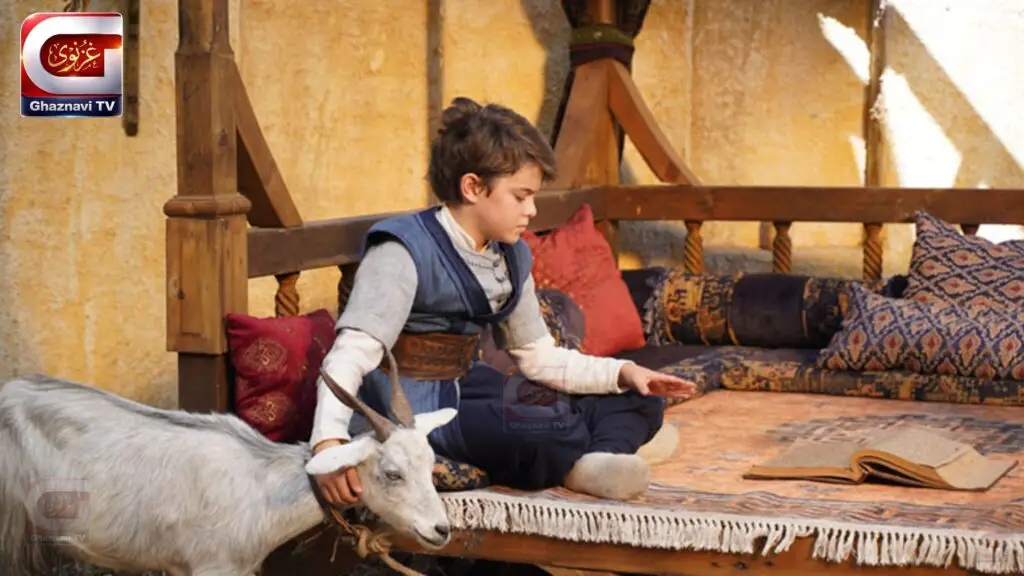
What distinguishes young Sina’s engagement with herbs and natural substances in Ibn Sina Episode 7 Urdu Dubbed is the specific quality of his observation — the way he does not simply note that certain plants seem to have certain effects, but asks why, and what the answer to that question implies about how similar effects might be produced by different means or in different situations. This why-asking is the intellectual operation that transforms empirical observation into the beginning of systematic understanding — and it is operating in Episode 7 with a consistency and a sophistication that is genuinely impressive.
The Connection Between Natural Philosophy and Medical Practice
One of the most historically accurate things that Ibn Sina Episode 7 Urdu Dubbed depicts in its pharmacological dimension is the specific connection between natural philosophy — the theoretical understanding of how the natural world is structured — and practical medical application. For the historical Ibn Sina, as for his predecessors in the Islamic and Greek philosophical traditions, the study of natural substances was not separate from the study of natural philosophy. It was a branch of it — an application of theoretical understanding about the structure of reality to the specific question of how that structure is expressed in the properties and effects of natural substances.
Young Sina in Episode 7 is already beginning to think in this integrated way — already connecting what he observes about specific herbs to what he understands about the body and the world more generally. This integration is historically accurate and intellectually significant — and it is shown with the specificity of detail that makes it genuinely educational rather than simply illustrative.
What This Thread Means for the Finale
The pharmacological dimension of young Sina’s curiosity that Ibn Sina Episode 7 Urdu Dubbed develops will continue into the final three episodes — and it will do so in ways that connect it to the medical challenges and the human situations that those episodes will bring. The understanding he is developing about herbs and natural substances is not a separate intellectual interest. It is a component of the integrated medical intelligence that the season has been building — and the final episodes will show how it functions as part of that whole.Ibn Sina Episode 7 Urdu Dubbed
Logic That Has Become Indistinguishable From How He Simply Thinks
The logical reasoning that has been developing throughout Season 1 has reached, in Ibn Sina Episode 7 Urdu Dubbed, the specific stage that the series has been building toward from its very beginning: it has become inseparable from young Sina’s ordinary way of engaging with everything he encounters. Logic is no longer something he applies. It is something he is — a fundamental feature of how his mind processes experience, evaluates possibilities, and constructs understanding.
This stage of development — where disciplined reasoning has been internalized to the point of being automatic — is one of the most important achievements in the history of any individual’s intellectual formation. Before it, logical discipline is a tool that must be consciously selected and deliberately applied. After it, it is a feature of the cognitive environment within which all other intellectual activity occurs — available without cost, always present, continuously shaping what is noticed, how it is interpreted, and what conclusions are drawn.Ibn Sina Episode 7 Urdu Dubbed
Logic Operating in the Background of Everything
What is most impressive about the logical reasoning visible in Ibn Sina Episode 7 Urdu Dubbed is precisely its invisibility — the degree to which it is no longer separately observable as a distinct intellectual activity. In the early episodes, young Sina’s logical reasoning was visible as something he did deliberately — moments of obvious, explicit logical engagement that could be identified and appreciated as such. In Episode 7, it operates in the background of everything — continuously present in how he moves through the world, how he processes what he encounters, and how he makes decisions about what to do next.
What Invisible Logic Produces
The practical consequence of young Sina’s logic becoming invisible in Ibn Sina Episode 7 Urdu Dubbed is that everything he does is more reliable, more consistent, and more genuinely trustworthy than it would be if his reasoning were still effortful and deliberate. When logical discipline is automatic, the results it produces are not occasionally good — when he remembers to apply it — but consistently good, because they are the natural product of a cognitive process that is always operating.Ibn Sina Episode 7 Urdu Dubbed
This reliability — the specific quality of trustworthiness that comes from consistent rather than occasional application of good reasoning — is one of the most important contributions that logical discipline makes to genuine intellectual excellence. And it is what Episode 7 shows young Sina having fully achieved, not through any single dramatic demonstration but through the consistent quality of his engagement with everything the episode places before him.
Logic as the Foundation of Science and Philosophy Both
One of the historically accurate insights that Ibn Sina Episode 7 Urdu Dubbed embodies is the understanding that the same logical discipline underlies both scientific investigation and philosophical reasoning — that the form of thought required to evaluate a medical observation correctly is, at its deepest level, the same form of thought required to evaluate a philosophical argument correctly. Young Sina’s integrated engagement with both domains, visible throughout the season and particularly clear in Episode 7, reflects this historical truth about the intellectual culture of the Islamic Golden Age — a culture that understood logic not as belonging to any single discipline but as the common foundation of all genuine inquiry.Ibn Sina Episode 7 Urdu Dubbed
Quran and Knowledge – The Integration That Has Shaped Everything From the Beginning
By Ibn Sina Episode 7 Urdu Dubbed, the relationship between young Sina’s Quranic engagement and his scientific and philosophical inquiry has reached a stage of integration that is genuinely beautiful to watch — and genuinely accurate to the historical reality it depicts. These are not two separate activities that he balances against each other. They are aspects of a single unified pursuit of truth that draw on different methods and different sources but that point consistently in the same direction.
The Quran, for young Sina in Episode 7, is not simply a text he studies. It is a living source of questions and orientations — a text that continuously opens new dimensions of his engagement with the world rather than closing them down. Its command to reflect on creation is not a general permission to be curious. It is a specific intellectual and spiritual obligation — the obligation to engage seriously with what exists, to understand it as fully as possible, and to apply that understanding in service of the people it could benefit.

The Verse That Shapes Episode 7’s Inquiry
There is a specific Quranic engagement in Ibn Sina Episode 7 Urdu Dubbed that shapes the direction of the episode’s central inquiry — not by providing an answer to the question young Sina is pursuing, but by providing a reorientation of the question itself. The verse in question — engaged with in the context of his regular Quranic study — reveals an angle on the situation he is investigating that his purely empirical engagement had not produced. And this revelation is not presented as mystical or inexplicable. It is shown as the natural result of having two different legitimate sources of insight — revelation and reason — available simultaneously and in active conversation with each other.Ibn Sina Episode 7 Urdu Dubbed
Faith as the Motivational Core of Intellectual Excellence
One of the things that Ibn Sina Episode 7 Urdu Dubbed communicates with particular clarity at this stage of the season is the role of faith as the motivational foundation of young Sina’s intellectual excellence. It is not simply that his faith gives him permission to pursue knowledge — though it does that. It is that his faith makes the pursuit of knowledge feel like an obligation — like something he is required to do as fully and as honestly as possible, because the world he is studying was created by God and deserves the quality of attention that reflects that origin.
This understanding — of knowledge as an act of worship, of genuine inquiry as a form of engagement with the divine — is one of the most specifically Islamic dimensions of the historical Ibn Sina’s intellectual formation. And Ibn Sina Episode 7 Urdu Dubbed depicts it not as a doctrine but as a living reality, visible in the specific way young Sina carries himself in relation to his learning.
Why This Integration Resonates for Muslim Viewers
For Muslim viewers watching Ibn Sina Episode 7 Urdu Dubbed on Ghaznavi TV, the integration of Quranic engagement and intellectual inquiry that young Sina embodies is not simply historically interesting. It is personally relevant — a portrayal of an Islamic approach to knowledge that is continuous with their own tradition and that demonstrates, through this specific child’s experience, what that approach has always been capable of producing at its best.
Character That Has Been Tested Across Seven Episodes and Found Genuinely Strong
Young Sina’s character in Ibn Sina Episode 7 Urdu Dubbed is not simply declared or demonstrated in isolated moments. It has been tested — across seven episodes of specific situations that required specific choices — and the testing has consistently revealed the same qualities: honesty, fairness, genuine care for others, and the kind of moral consistency that operates not because it is required or rewarded but because it has become simply who he is.
By Episode 7, these qualities are no longer fresh discoveries about his character. They are established facts — things the viewer knows about him with the confidence of having watched them operate under genuine pressure across six previous episodes. And this established confidence changes how the character moments of Episode 7 land: they carry the specific weight of confirmation rather than the lighter weight of initial establishment.
The Specific Ethical Challenge Episode 7 Presents
The ethical dimension of Ibn Sina Episode 7 Urdu Dubbed is not separate from its intellectual content. The specific moral challenge the episode presents to young Sina is connected to his medical work — a situation where the honest answer to a medical question is not the comfortable one, where telling the truth about what he understands serves the person who needs it but creates difficulty in other dimensions of the social situation.
His response to this challenge is what Episode 7 uses to confirm the character that six previous episodes established. He tells the truth. Not dramatically, not with evident struggle against the temptation to soften it, but simply — because telling the truth is what he does, what he has always done, and what he will continue to do regardless of whether the situation makes it easy or difficult.
Kindness and Truth as an Integrated Practice
What is particularly impressive about the ethical dimension of Ibn Sina Episode 7 Urdu Dubbed is the specific way young Sina integrates kindness and truth — refusing to treat them as competing values, finding the way to be both honest and genuinely caring in situations where a less developed moral sensibility might see them as mutually exclusive. This integration — of truth-telling with genuine compassion for the people affected by the truth — is one of the marks of genuinely mature moral character. And seeing it operating in a child, through the specific texture of how he engages with difficult situations, is one of the most valuable things this series offers.
Character as the Completion of Genius
The specific argument that Ibn Sina Episode 7 Urdu Dubbed makes through the parallel development of young Sina’s intellectual capabilities and his moral character is one of the most important things the series has to say: that genius without character is incomplete, and that the historical Ibn Sina’s enduring significance came not simply from what he understood but from what he did with that understanding in service of real people. Episode 7 shows this integration at its most complete and most convincing.

His Father in Episode 7 – Pride That Has Crossed Into Something Closer to Awe
The relationship between young Sina and his father has been one of the season’s most consistently rewarding threads — a portrayal of parental investment in an exceptional child that has evolved with genuine care and genuine honesty across seven episodes. In Ibn Sina Episode 7 Urdu Dubbed, this relationship reaches a specific and moving stage: the father’s pride in his son has crossed a threshold into something qualitatively different — something closer to awe.Ibn Sina Episode 7 Urdu Dubbed
Pride is a feeling you have about someone whose achievements you understand. Awe is a feeling you have about someone whose achievements have exceeded what you can fully comprehend. By Episode 7, young Sina’s father has been witnessing his son’s development for long enough and closely enough to understand that what is happening in this child goes beyond what his experience prepared him to evaluate. He cannot fully assess it. He can only recognize, with the specific quality of wonder that genuinely exceeds expectations produces, that it is extraordinary.
A Father Who Knows He Made the Right Choices
One of the most quietly satisfying elements of the father’s characterization in Ibn Sina Episode 7 Urdu Dubbed is the specific quality of peace that is now visible in his engagement with his son’s development. In earlier episodes, he carried a quality of purposeful urgency — the urgency of someone who knows that exceptional potential requires exceptional cultivation and who is working hard to provide what is needed. By Episode 7, that urgency has been replaced by something calmer: the satisfaction of someone who made difficult choices, invested genuine effort, and is watching those choices and that effort produce the results he hoped for.
The Conversation That Episode 7 Gives Them
The specific conversation between young Sina and his father in Ibn Sina Episode 7 Urdu Dubbed is one of the episode’s most carefully crafted scenes — a moment where the full accumulated weight of their relationship is present in a relatively brief exchange. What is said is less important than how it is said — the specific quality of mutual understanding and mutual respect that has developed between them, the ease of communication that comes from a relationship in which both parties have been genuinely honest with each other across a significant shared experience.
What This Relationship Has Taught Both of Them
By Episode 7, the relationship between young Sina and his father in Ibn Sina Episode 7 Urdu Dubbed has taught both of them something specific about what genuine parental support looks like. The father has learned that the most valuable thing he can provide is not any particular resource or teaching but the quality of environment — the combination of high expectation, genuine freedom, and unconditional support — that allows genuine potential to develop at its own pace toward its own destination. And young Sina has learned that the people who believe in you before they can fully understand you are one of the most valuable things in any exceptional person’s life.
The Islamic Golden Age as a Living Reality, Not a Historical Label
One of the most consistent achievements of Ibn Sina Episode 7 Urdu Dubbed — and of the series as a whole, but particularly visible in Episode 7 — is the degree to which the Islamic Golden Age is depicted not as a historical label applied to a distant period but as a living reality that specific people in specific places actually inhabited. The scholars, the merchants, the families, the communities that populate Bukhara in this episode are not performing their era. They are living their lives inside it — with the ordinary mixture of the remarkable and the mundane that characterizes actual human existence in any period.
This approach — treating historical people as real people rather than as representatives of a historical era — is one of the most important choices any historical drama can make. And the series makes it consistently and successfully across all seven episodes, producing a portrait of the Islamic Golden Age that is both historically authentic and humanly recognizable.
The Culture of Learning That Made Ibn Sina Possible
What Ibn Sina Episode 7 Urdu Dubbed shows with particular clarity is the specific culture of learning that the Islamic Golden Age embodied — the specific set of values, practices, and institutional arrangements that made it possible for extraordinary intellectual achievement to be produced in this period and in these places. The respect for knowledge as a religious obligation, the institutional support for scholars and scholarship, the specific quality of intellectual openness that allowed ideas from different traditions to be engaged with and integrated — all of these are visible in how the characters of Episode 7 relate to each other and to the pursuit of understanding.Ibn Sina Episode 7 Urdu Dubbed
Bukhara as a Model of What Islamic Civilization Could Be
The Bukhara of Ibn Sina Episode 7 Urdu Dubbed — the Bukhara of the Samanid period, at the height of its cultural and intellectual achievement — represents something that the series has been building across seven episodes: a picture of what Islamic civilization looks like at its best. Not at its most powerful or its most extensive, but at its most genuinely itself — most fully expressing the values that its founding texts and founding figures established as the proper orientation of a Muslim community.
For viewers who know more about this period — and for those who are learning about it for the first time through this series — Episode 7 offers a portrait that is both inspiring and accurate. For more historical context on the Samanid period and its role in Islamic intellectual history, Britannica’s article on Avicenna provides a reliable foundation.
What South Asian Muslim Viewers See in This World
For Pakistani and South Asian Muslim viewers watching Ibn Sina Episode 7 Urdu Dubbed on Ghaznavi TV, the world the series depicts is both distant and familiar — distant in its historical specificity, familiar in the values and orientations that have been transmitted from that world to this one across generations of Islamic intellectual and spiritual tradition. Watching the Bukhara of Episode 7 is, for these viewers, something like watching a portrait of where they came from — of the specific civilization whose achievements and whose values constitute a significant part of their own heritage.
Three Episodes Remaining – What Season 1 Is Now Clearly Going to Deliver
By the conclusion of Ibn Sina Episode 7 Urdu Dubbed, the shape of Season 1’s ending is now clearly visible — not in its specific events, which remain to be discovered, but in the quality of what it will deliver. The series has built, across seven careful episodes, exactly the kind of story that earns a genuinely satisfying ending — one where the resolutions feel necessary rather than convenient, where the character we have been watching arrives at a conclusion that reflects who he has genuinely become, and where the world we have been inhabiting sends us out of it with something real to carry.
The specific threads that Episodes 8, 9, and 10 will complete are all visible in Episode 7: the medical understanding that has crossed into original territory and will face its final, most demanding test; the relationships — with father, teachers, and community — that have been developed to the point where their final expressions will carry real weight; and the integration of faith, reason, and compassion that has been the season’s central achievement and that the finale will honor with the dignity it has earned.
The Anticipation That Episode 7 Creates for Episodes 8 and 9
The specific quality of anticipation that Ibn Sina Episode 7 Urdu Dubbed creates for the episodes that follow is not the anxious kind that cliffhangers produce. It is the deeper kind that comes from a story that has proven it can be trusted — that has delivered consistently on what it promised and that shows every sign of continuing to do so. Viewers who have reached Episode 7 know what this series is capable of. They know that the three remaining episodes will honor what the first seven built. And they are looking forward to those episodes with the specific quality of confidence that only genuinely good storytelling generates.
What the Finale Needs to Deliver
The finale of Season 1 — toward which Ibn Sina Episode 7 Urdu Dubbed is now clearly building — needs to do several things: bring young Sina’s intellectual development to its most complete expression within the season’s scope, honor the relationships and values that have been built across ten episodes, and leave viewers with a sense that the story told is complete in itself even as it suggests the extraordinary adult that this child will become. Based on what Episode 7 delivers, there is every reason to believe the finale will achieve all of this.Ibn Sina Episode 7 Urdu Dubbed
A Series Worth Watching From Beginning to End
For viewers who are only now discovering this series, Ibn Sina Episode 7 Urdu Dubbed is available on Ghaznavi TV — as are all previous episodes. Starting from Episode 1 and watching through to Episode 7 will deliver the full experience that this review has been describing: the specific pleasure of watching a character developed with patience and honesty across seven careful episodes, and the specific anticipation of watching him arrive at the destination that seven episodes of development have been building toward.
Watch Ibn Sina Episode 7 Urdu Dubbed Free on Ghaznavi TV
Ibn Sina Episode 7 Urdu Dubbed is available right now — completely free — on Ghaznavi TV at www.ghaznavitv.site. HD quality Urdu dubbing, smooth streaming on any device, all ten episodes of Season 1 available. No registration. No payment. No waiting.
Three episodes from the end of one of the most genuinely beautiful series available for Muslim families — and the story is at its most fully alive. This is not the moment to stop watching.
🌐 Watch Free Now: www.ghaznavitv.site | Ibn Sina Episode 7 Urdu Dubbed | All 10 Episodes | HD | Free
⬇ Download Full HD
What happens in Ibn Sina Episode 7 Urdu Dubbed?
Episode 7 shows young Sina operating with all of his developed capabilities — observation, logic, medical understanding, pharmacological curiosity, and moral character — working together as a fully integrated whole for the first time. The episode presents his most complex challenge yet, one that requires this full integration to engage with adequately, and shows him producing a discovery that is genuinely original rather than simply impressive. It also develops his relationship with his father to a new stage, and deepens the series’ portrayal of Bukhara’s learning culture.
Where can I watch Ibn Sina Episode 7 Urdu Dubbed for free?
Watch it completely free on Ghaznavi TV at www.ghaznavitv.site. HD quality Urdu dubbing, all ten episodes of Season 1 available — no account or payment required.
Why is Episode 7 described as the season at its most fully realized?
Episode 7 is the third episode of the second half, the point where everything built across six previous episodes is now simultaneously available and simultaneously active. Young Sina’s observation, logic, medical understanding, ethical character, and relationship with faith are all operating together as a genuinely integrated whole — for the first time in the season — in response to a challenge that genuinely requires all of them. This integration is what “fully realized” means in the context of this season’s developmental arc.





[…] WhatsApp ▶ Epiosde 7 ⬇ Scroll down to Download Full HD […]
[…] WhatsApp ▶ Epiosde 7 ⬇ Scroll down to Download Full HD […]