
Ibn Sina Episode 6 Urdu Dubbed is now streaming free on Ghaznavi TV. The sixth episode of a ten-episode season carries a specific and interesting kind of weight — it is the first episode of the second half, the point where everything the series built in Episodes 1 through 5 must now begin delivering on its deepest promises. Episode 6 does exactly this. The questions young Sina is asking are deeper. The methods he is applying are more sophisticated. And the discoveries he makes carry a weight that earlier episodes were building toward without yet being able to fully deliver.
Watch Ibn Sina Episode 6 Urdu Dubbed

TABLE OF CONTENT
Table of Contents
Why Ibn Sina Episode 6 Urdu Dubbed Opens the Most Rewarding Phase of Season 1
Ibn Sina Episode 6 Urdu Dubbed marks something specific in the arc of the season — a shift from buildup to delivery, from foundation to structure. The first five episodes were necessarily introductory in certain senses: they established who young Sina is, how he thinks, what drives him, what his family looks like, what the world of 10th-century Bukhara offers him. Episode 6 is the first episode that can take all of that as given — that can work from the assumption that the audience knows this child and cares what happens to him — and can therefore go places that earlier episodes could not.
The result is an episode that feels richer, more layered, and more genuinely surprising than anything that came before it. Not because the production quality has changed or the character has been reimagined, but because the accumulation of five careful episodes has created the conditions under which Episode 6 can be fully itself. The soil was prepared. Episode 6 is where something genuinely starts to grow.
The Specific Shift Between Episodes 5 and 6
Viewers who watched Episode 5 on Ghaznavi TV and come directly to Ibn Sina Episode 6 Urdu Dubbed will notice something specific in the opening scenes: young Sina is operating with a quality of confidence and purposefulness that was not quite present before. He is not simply curious now — he is purposefully directed. His curiosity has found its channel. And watching him move through the world with that channel established — knowing roughly what he is looking for even when he does not know exactly where to find it — is one of the most satisfying things the series has offered so far.
What the Second Half of a Season Is Supposed to Do
The structural function of a season’s second half in any well-designed dramatic series is to deliver on the promises that the first half made — to take the emotional investments and narrative setups of the opening episodes and show what they were actually building toward. Ibn Sina Episode 6 Urdu Dubbed begins this delivery with impressive confidence and clarity. By the time it ends, viewers understand that the remaining four episodes will be completing something rather than simply continuing it — and that understanding changes the quality of anticipation for what comes next.

The Cumulative Effect That Makes Episode 6 Possible
There is a specific form of creative debt that serialized storytelling accumulates across its early episodes — a debt that is paid by the later episodes that the earlier ones were making possible. Ibn Sina Episode 6 Urdu Dubbed is the first episode that begins paying this debt in full. Every character moment established in the first half, every intellectual development shown in those earlier chapters, every relationship built with the care that the series consistently brings — all of it is now available as a resource, and Episode 6 draws on it with an assurance that is itself one of the most rewarding things about watching this particular moment in the season’s arc.
Questions That Have Grown Deeper Than Simple Answers Can Easily Reach
One of the most immediately visible signs of young Sina’s development in Ibn Sina Episode 6 Urdu Dubbed is the specific quality of the questions he is now asking. Compared to the questions he asked in Episodes 1 and 2 — genuinely good questions, carefully formed, but working within the territory that his early education had already partially mapped — the questions of Episode 6 operate at a deeper level. They reach into territory that his teachers acknowledge is less fully charted. They connect domains in ways that require genuine synthesis rather than simple application. And they carry the specific quality of questions that are driving rather than simply driven — that are pushing the inquiry forward rather than responding to what the inquiry has encountered.
This shift in the quality of questioning is one of the most reliable indicators of genuine intellectual development — and the series handles it with the care it deserves. Young Sina’s deeper questions in Episode 6 are not presented as impressive performances. They are shown as the natural expression of a mind that has been working seriously for five episodes and has now reached the point where the simple answers are no longer adequate to the depth of what the questions are actually asking.
When Questions Start Generating More Questions
There is a specific phenomenon in intellectual development — well documented in the histories of science, philosophy, and medicine — where a certain depth of understanding produces a paradoxical effect: the more you know, the more clearly you can see how much you do not know. Young Sina in Ibn Sina Episode 6 Urdu Dubbed is experiencing this phenomenon in real time. The understanding he has developed across the first five episodes has given him the conceptual tools to see questions that his earlier, more naive engagement with these subjects could not even formulate.
This experience — of understanding growing faster than answers, of the horizon of the unknown receding even as the map of the known expands — is genuinely characteristic of how the best scientific and philosophical minds operate. And it is depicted in Episode 6 with the kind of honest specificity that makes it feel like a real portrait of a real mind rather than an idealized image of intellectual development.
How His Teachers Respond to Questions That Exceed Their Answers
The specific challenge that young Sina’s deepened questions create for his teachers in Ibn Sina Episode 6 Urdu Dubbed is handled with the same sensitivity that characterized the earlier episodes’ teacher-student dynamics. These are not teachers who become defensive when their student reaches the edge of what they can comfortably answer. They are teachers who respond to that edge with genuine intellectual interest — who treat the fact that their student has arrived at a question they cannot fully answer as evidence of his advancement rather than as a challenge to their authority.
This quality of intellectual openness in the teachers — the willingness to acknowledge limits honestly and to treat those limits as the starting point for further inquiry rather than as territory to be defended — is one of the most important environmental factors in young Sina’s development. And Episode 6 shows it operating with particular clarity and particular warmth.
What Deeper Questions Mean for the Remaining Episodes
The specific depth that young Sina’s questions have reached by Ibn Sina Episode 6 Urdu Dubbed creates a new baseline for the remaining four episodes of the season. The questions that will drive Episodes 7 through 10 are questions that could not have been asked before the first six episodes built the understanding necessary to formulate them. This escalation — of the sophistication of the inquiry alongside the sophistication of the answers it generates — is one of the most compelling arcs in the series, and Episode 6 marks its reaching a new and genuinely exciting stage.
The Discovery That Episode 6 Has Been Building Toward Since Episode 1
At the center of Ibn Sina Episode 6 Urdu Dubbed is a discovery — a specific insight or understanding that young Sina arrives at through the application of everything the series has shown him developing — that carries a weight significantly greater than any individual discovery in the preceding episodes. This is not simply because the discovery is more technically impressive than earlier ones. It is because the specific thing he discovers in Episode 6 connects multiple threads of his developing understanding in a way that has not previously been achieved — a synthesis that reveals something about how apparently separate domains of knowledge relate to each other.
The discovery is earned rather than given. Every observation he has made in earlier episodes, every logical framework he has developed, every medical insight he has arrived at — all of these contribute specific pieces that come together in Episode 6 in a way that produces something genuinely new. Watching this synthesis happen — watching the pieces that have been assembled across five episodes finally combine into something that none of them could produce alone — is one of the most satisfying experiences the series has offered.
Why This Discovery Feels Different From Earlier Ones
Young Sina has made discoveries in each of the previous five episodes — this is built into the series’ structure. But the discovery in Ibn Sina Episode 6 Urdu Dubbed has a quality that distinguishes it from its predecessors: it is surprising to him as well as to the viewer. Earlier discoveries, however impressive, reflected the application of methods and frameworks that young Sina could have articulated before he began the investigation. The discovery of Episode 6 takes him somewhere he could not have anticipated — somewhere that his methods led him rather than somewhere he was explicitly heading.
This quality of genuine surprise — of being taken somewhere by honest inquiry rather than guided toward a predetermined conclusion — is one of the defining characteristics of the best kind of intellectual discovery. And the series depicts it here with the specific honesty that makes it feel like something that actually happened to this character rather than something arranged for the viewer’s benefit.
What the Discovery Reveals About How Young Sina Now Thinks
Beyond its specific content, the discovery in Ibn Sina Episode 6 Urdu Dubbed is significant for what it reveals about the current state of young Sina’s intellectual development. A mind that can be genuinely surprised by where honest inquiry leads is a mind that is actually following the inquiry rather than directing it toward a comfortable conclusion. This quality — of being genuinely led by evidence rather than simply using evidence to support predeterminations — is the foundational intellectual virtue that makes genuinely original knowledge production possible. Episode 6 shows it clearly, without fanfare, as simply the way this particular child’s mind has come to work.
How This Discovery Connects to the Historical Ibn Sina’s Legacy
The specific quality of discovery that young Sina demonstrates in Ibn Sina Episode 6 Urdu Dubbed is historically connected to what made the adult Ibn Sina’s contributions so significant and so durable. The Canon of Medicine — his greatest work — was not simply a compilation of existing knowledge. It was a synthesis that revealed connections between apparently separate medical domains that had not previously been clearly articulated. The synthesizing capacity visible in embryonic form in Episode 6’s discovery is the same capacity that would eventually produce this historic achievement. Episode 6 makes that connection visible for viewers who know where the story ends — and makes the beginning feel genuinely significant in light of that knowledge.
Medical Understanding That Has Crossed Into Genuinely New Territory
The medical dimension of young Sina’s curiosity has been one of the most consistent threads of the season in Ibn Sina Episode 6 Urdu Dubbed, and Episode 6 marks a specific development in this thread: his medical understanding has crossed a threshold. He is no longer thinking about illness and the body in the framework that his teachers have provided him. He is beginning to think in a framework of his own construction — one that draws on everything he has been taught but that organizes and extends it in ways that are specifically his.
This transition — from working within received frameworks to beginning to construct original ones — is the most significant intellectual development the series has depicted. And Episode 6 handles it with the appropriate seriousness: showing it not as a single dramatic moment of breakthrough but as the gradual emergence of something that has been forming across many episodes and that is now visible enough to be clearly recognized.
The Specific Medical Question That Episode 6 Addresses
The medical challenge at the heart of Ibn Sina Episode 6 Urdu Dubbed is chosen with the kind of developmental precision that characterizes the series’ best episodes. It is genuinely difficult — genuinely beyond what his existing training would be expected to address — and its engagement requires exactly the synthesizing capacity that the episode is simultaneously showing him developing. The medical question and the intellectual development are not simply parallel storylines. They are causally connected: the question is what demands the development, and the development is what makes the question answerable.
The specific medical insight young Sina arrives at in his engagement with this challenge reflects an approach to understanding the body that is ahead of its time — ahead, specifically, of what the formal medical knowledge of 10th-century Bukhara would have provided. This historical accuracy — the depiction of a child whose medical thinking is already outpacing his formal training — is one of the things that makes the series genuinely valuable as a portrait of an exceptional mind rather than simply as an entertaining story.
The Human Stakes That Make the Medical Work Feel Urgent
What distinguishes young Sina’s medical work in Ibn Sina Episode 6 Urdu Dubbed from purely intellectual exercise is the human stakes attached to it. The people whose situations drive his medical inquiry are not abstract cases. They are specific individuals — people with families, with concerns, with specific forms of suffering that his developing understanding might or might not be able to address. These human stakes are what give the intellectual work its specific quality of urgency and what connect his theoretical development to the moral commitment that has always been its underlying motivation.
The Road From Episode 6’s Medical Thinking to the Canon of Medicine
Viewers who know the history of the adult Ibn Sina will recognize in the medical thinking of Ibn Sina Episode 6 Urdu Dubbed something specific: the earliest visible form of the systematic, framework-building approach that will eventually produce one of the most influential medical texts in human history. The Canon of Medicine organized medical knowledge around a theoretical framework rather than simply cataloguing observations — and Episode 6 shows the habit of mind that produces theoretical frameworks beginning to operate with its first genuine independence. The distance from here to there is large. But the direction is already clear.
Logical Reasoning That Now Operates at a New Level of Sophistication
Across the first five episodes of the season, young Sina’s engagement with logic — with the formal tools of reasoning that his philosophical education has been providing — has been one of the consistent pleasures of the series. In Ibn Sina Episode 6 Urdu Dubbed, this engagement reaches a qualitatively new level. He is no longer applying logical principles that he has been taught. He is using them — genuinely, creatively, in ways that the teaching of those principles did not explicitly anticipate.
The distinction between applying and using is significant. Application is the reproduction of a taught method in a situation that the method was designed to handle. Using is the creative deployment of a principle in situations that go beyond what the teaching of the principle explicitly prepared for. Episode 6 shows young Sina making this transition — and the making of it, shown through specific scenes of problem-engagement rather than through any explicit statement, is one of the episode’s most intellectually rewarding elements.
Logic as a Living Tool Rather Than a Formal System
What Ibn Sina Episode 6 Urdu Dubbed depicts with particular clarity is the specific way that logical reasoning functions for young Sina — not as a formal system he applies from outside to problems he encounters, but as a living component of how he engages with everything he encounters. His logical discipline is not something he reaches for when a problem requires it. It is present continuously in how he observes, how he interprets what he observes, how he formulates questions about what he has interpreted, and how he evaluates the possible answers those questions generate.
This integration of logical discipline into the fabric of ordinary intellectual engagement — rather than its isolation as a special procedure for special occasions — is one of the marks of genuinely formed philosophical reasoning. And Episode 6 shows it operating with a naturalness that communicates clearly that it has been genuinely internalized rather than simply practiced.
The Specific Logical Move That Episode 6 Highlights
Among the various logical operations visible in young Sina’s thinking throughout Ibn Sina Episode 6 Urdu Dubbed, one is highlighted by the episode with particular care: the move from specific observations to general principles, and then the application of those general principles to new specific situations that the original observations did not include. This move — which philosophers call induction followed by deduction — is the basic logical engine of the empirical sciences, and seeing it operating in the mind of a ten-year-old child in 10th-century Bukhara is itself one of the most genuinely interesting things the series offers.
Why This Level of Reasoning Matters for What Comes After
The logical sophistication that Ibn Sina Episode 6 Urdu Dubbed establishes as young Sina’s new baseline will be the foundation on which the remaining four episodes build. The challenges he will face in Episodes 7 through 10 will require this level of reasoning to engage with adequately — and the fact that Episode 6 has established it clearly means that those later episodes can work from its availability rather than needing to demonstrate it again from scratch. Episode 6 is, in this sense, as much about positioning for what follows as it is about what it directly delivers.
The Problem That Tests Everything He Has Learned So Far
Every episode of Ibn-i Sina: The Young Genius gives its central character a problem to engage with — a challenge that requires the specific combination of skills and knowledge that the episode is simultaneously depicting in development. Ibn Sina Episode 6 Urdu Dubbed follows this structure, but the problem it presents carries more accumulated weight than any of its predecessors. It is designed to test not one or two of young Sina’s developed capacities, but the integration of everything he has developed across the full first half of the season.
This design — of a problem that functions as a test of integration rather than of individual skills — is what makes Episode 6’s challenge qualitatively different from those in earlier episodes. To engage with it adequately requires drawing simultaneously on his observational discipline, his logical reasoning, his medical understanding, his philosophical framework, and his ethical commitments. And the specific quality of his engagement — the way all of these capacities are brought to bear in real time, visibly informing each other — is one of the most impressive demonstrations of development that the series has offered.
The Difficulty That Pushes Him Beyond Comfort
One of the things that Ibn Sina Episode 6 Urdu Dubbed handles with particular honesty is the genuine difficulty of the problem it presents young Sina. This is not a challenge that he engages with smoothly and solves efficiently. There are moments of genuine confusion, of pursuing approaches that prove inadequate, of having to step back and reconsider from a different angle. The episode shows all of these moments rather than editing them out for the sake of a more impressive-looking engagement.

This honesty about difficulty is one of the series’ most valuable qualities — and it is specifically valuable for the young viewers watching on Ghaznavi TV. What they see in Episode 6 is not a child who solves problems because he is naturally brilliant. They see a child who solves problems because he stays with them through the difficulty — because his discipline and his genuine curiosity are stronger than the discomfort of not yet knowing.
The Process of Working Through It
The specific process by which young Sina works through the problem in Ibn Sina Episode 6 Urdu Dubbed is one of the episode’s most carefully constructed elements. The episode takes the time to show this process in genuine detail — the gathering of information, the formation and testing of preliminary hypotheses, the revision of those hypotheses in light of what the testing reveals, and the gradual narrowing of the space of possible answers until the right one becomes identifiable with confidence. This process is not compressed or simplified. It is shown in the real time it takes — which is itself a form of respect for the audience’s intelligence and patience.
What Solving It Demonstrates About His Integration
The resolution of the problem in Ibn Sina Episode 6 Urdu Dubbed demonstrates something specific that is more important than the solution itself: it demonstrates that the integration of young Sina’s various capacities — his observational, logical, medical, and philosophical resources — is now functioning at a level where they genuinely reinforce each other rather than simply coexisting. The solution is not the product of one of these capacities working alone. It is the product of all of them working together, each making the others more effective than they would be in isolation. That integration is the real achievement of Episode 6 — and it is the foundation on which the final four episodes of the season will build.
Kindness That Is Becoming a More Deliberate and More Powerful Practice
The ethical dimension of young Sina’s character has been present throughout the season, but Ibn Sina Episode 6 Urdu Dubbed shows it developing in a specific direction that is particularly meaningful at this stage: his kindness is becoming more deliberate. Not in the sense that it is becoming less genuine — quite the opposite. It is becoming more considered, more specifically targeted, more effectively deployed in ways that actually help rather than simply express care.
There is an important distinction between kindness as feeling and kindness as practice. The feeling is good and necessary — it is the motivational foundation without which the practice would be hollow. But the practice requires something additional: the discipline to translate feeling into action in ways that are actually responsive to the specific needs of the specific person being helped. Young Sina in Episode 6 is increasingly demonstrating the practice rather than simply the feeling — and the difference is visible in how his attempts to help actually land.
Kindness Informed by Understanding
What distinguishes young Sina’s kindness in Ibn Sina Episode 6 Urdu Dubbed from its earlier expressions is the degree to which it is informed by genuine understanding. He does not simply feel moved to help someone who is suffering and then offer the most natural or obvious form of assistance. He applies his developing understanding of what is actually happening — his medical knowledge, his careful observation, his logical analysis of the specific situation — to identifying what form of help would actually be useful rather than simply comforting.
This combination of feeling and understanding in the service of practical kindness is one of the most important qualities in genuinely excellent medical practice — and in any form of genuine service to others. Episode 6 shows it developing in young Sina with the specific naturalness that comes from a character whose intellectual development and moral development have been proceeding together rather than in isolation from each other.
The Specific Act of Kindness That Episode 6 Centers On
The particular act of kindness that Ibn Sina Episode 6 Urdu Dubbed places at the center of its ethical narrative is chosen with the series’ consistent care for the specific over the general. It is not a grand gesture or a heroic sacrifice. It is a specific, thoughtful response to a specific, particular form of need — the kind of kindness that requires paying close attention to who someone actually is and what they actually need, rather than responding to a general category of suffering with a general category of assistance.
This specificity is what makes the kindness in Episode 6 feel genuinely earned rather than simply performed. And it is what makes it genuinely instructive for the young viewers who are watching — showing them not what kindness feels like, but what it looks like in practice when it is actually working.
Kindness as the Moral Core of What Science Is For
In showing young Sina’s kindness developing alongside his intellectual capabilities in Ibn Sina Episode 6 Urdu Dubbed, the series makes an argument that is implicit in the series’ entire structure but that becomes particularly visible in this episode: that the point of the kind of knowledge young Sina is developing is not the knowledge itself. The point is what the knowledge enables him to do for other people. Kindness is not a supplement to his intellectual development — it is the purpose toward which that development has always been oriented. Episode 6 makes this relationship more explicit than any previous episode has managed.
Bukhara in Episode 6 – A City That Has Become Young Sina’s Living Laboratory
By Ibn Sina Episode 6 Urdu Dubbed, the city of Bukhara has undergone a specific transformation in how it functions within the series’ storytelling. In the early episodes, Bukhara was primarily a setting — a historically specific backdrop that communicated something about the period and the culture within which young Sina’s development was occurring. By Episode 6, it has become something more: a living laboratory, a source of the specific problems and observations that are driving his intellectual development forward.
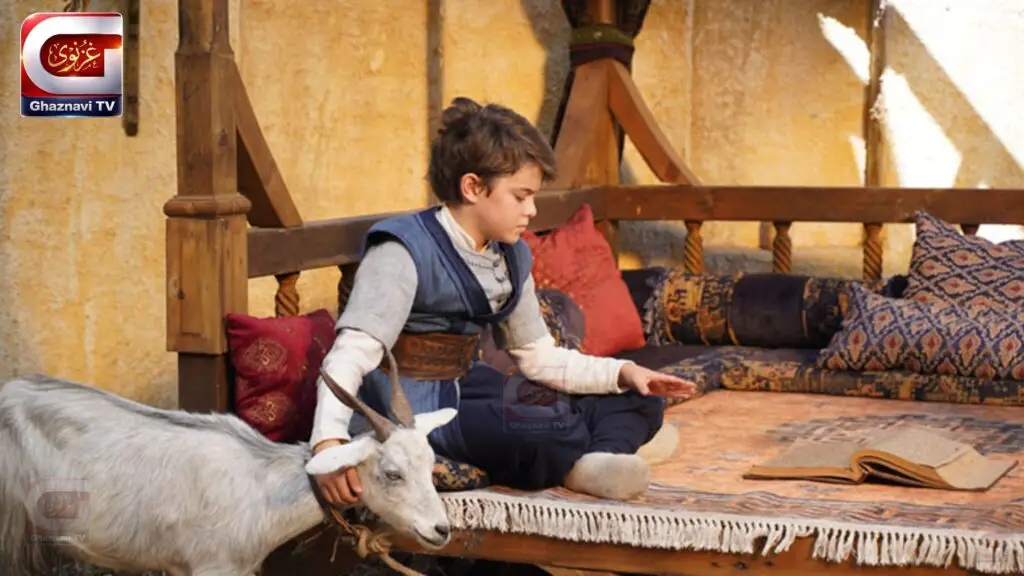
This transformation reflects something real about how young Sina’s engagement with the city has changed. He no longer simply moves through Bukhara’s streets and spaces. He reads them — actively observing what they reveal about the social, medical, and natural phenomena that his developing curiosity is engaged with. The city has become a text that he is learning to read with increasing sophistication, and the reading is producing insights that his formal education alone could not have generated.
The Specific Spaces That Episode 6 Explores
The spaces of Bukhara that Ibn Sina Episode 6 Urdu Dubbed takes young Sina through are chosen with the same developmental purposefulness that characterizes the series’ use of setting throughout. Each space — whether a market, a healer’s workshop, a community gathering place, or a quiet corner of the family’s home — offers something specific to the inquiry that the episode is pursuing. And the specific ways that young Sina engages with each space communicate something about the current state of his development — about what he is looking for and what he is capable of finding.
The City’s Social Life as a Source of Medical Observation
One of the most valuable things that Bukhara provides for young Sina’s development in Ibn Sina Episode 6 Urdu Dubbed is access to the full social range of human health and illness — to the specific ways that different forms of sickness manifest in people living different lives in the same physical environment. The variety that the city’s social life offers is a natural laboratory for exactly the kind of comparative observation that drives medical understanding forward — and Episode 6 shows young Sina using it with increasing deliberateness and increasing effectiveness.
The Architecture of Learning That Bukhara Embodies
What Ibn Sina Episode 6 Urdu Dubbed continues to show about Bukhara is the specific way its physical and social organization reflects the learning culture that made it one of the great centers of Islamic civilization. The spaces where knowledge is transmitted are not separate from the spaces where ordinary life is lived. The scholars and the merchants, the healers and the administrators, the students and the teachers — all of these move through the same city in ways that make knowledge genuinely continuous with the fabric of daily life. This integration is both historically accurate and narratively significant — and Episode 6 shows it with the loving attention to detail that the series has consistently brought to its depiction of this remarkable world.
The Quranic Dimension That Gives His Curiosity Its Direction and Its Depth
Throughout Season 1, the relationship between young Sina’s Quranic study and his scientific and philosophical inquiry has been one of the series’ most consistently beautiful elements. In Ibn Sina Episode 6 Urdu Dubbed, this relationship is shown with greater explicitness and greater depth than in any previous episode — and what is shown is not a tension between faith and inquiry but a genuine mutual enrichment.
The Quran, for young Sina, is not simply a religious text to be memorized and recited. It is a source of genuine intellectual engagement — a text that raises questions about the nature of the created world and the correct way to engage with it that his scientific and philosophical investigations then try to address through careful observation and systematic reasoning. The faith does not constrain the inquiry. It motivates it, gives it its moral seriousness, and provides the framework within which its results are understood and applied.
The Specific Connection Episode 6 Makes Between Revelation and Reason
There is a specific moment in Ibn Sina Episode 6 Urdu Dubbed where a verse young Sina has been studying creates a connection to the problem he has been working through — not as a shortcut to the answer, but as a reorientation of the inquiry that reveals a dimension of the problem he had not previously considered. This connection is not forced. It arises from genuine simultaneous engagement with both the text and the problem — from the specific quality of a mind that is genuinely living in both worlds and finding that they keep speaking to each other.

For Muslim viewers watching on Ghaznavi TV, this moment carries the specific resonance of recognition — the recognition of a way of relating to the Quran that is continuous with their own tradition and that demonstrates, through this child’s experience, the specific kind of intellectual and spiritual life that the Quran calls its readers toward.
Faith as the Orientation, Not the Limit
What Ibn Sina Episode 6 Urdu Dubbed communicates most clearly about the role of faith in young Sina’s development is that it functions as an orientation rather than a limit — as the compass that points his curiosity in directions that matter rather than as a fence that marks where curiosity must stop. This understanding of faith — as the source of the conviction that reality is ordered, comprehensible, and worth understanding, because it was created by an intelligence infinitely greater than his own — is one of the intellectual foundations of the Islamic Golden Age. And Episode 6 shows it operating in one child’s daily experience with a beauty and an honesty that is rare in any depiction of Islamic intellectual life.
What This Integration Means for Young Viewers
For young Muslim viewers watching Ibn Sina Episode 6 Urdu Dubbed, the integration of faith and inquiry that young Sina embodies offers something genuinely important: a living example from their own tradition that scientific curiosity and Islamic faith are not in competition, and that the most profound intellectual achievements of Islamic civilization were produced by people who held both with equal depth and equal seriousness. This is a message worth hearing clearly — and Episode 6 delivers it with more power and more clarity than any previous episode has managed.
What the Second Half of Season 1 Is Now Promising
By the time Ibn Sina Episode 6 Urdu Dubbed reaches its conclusion, it has established a new baseline for what the season can now do and what it will ask of its audience. The remaining four episodes — 7 through 10 — will be completing something that the first six episodes built the foundation for. And the quality of that foundation, visible in the depth and confidence of Episode 6, creates a specific quality of anticipation for what those final chapters will deliver.
The questions that will drive the second half are genuinely interesting questions — ones that the first half made possible by building the specific understanding necessary to formulate them. The character of young Sina, as established across six careful episodes, is now specific and deep enough to carry the weight of whatever those final episodes bring. And the world of Bukhara, fully established as a living environment rather than a historical setting, is ready to provide the specific context that the closing chapters require.

The Specific Threads That Episodes 7 Through 10 Will Complete
Several specific threads established or developed in Ibn Sina Episode 6 Urdu Dubbed will continue into the remaining episodes. His medical understanding, now operating at a new level of independence, will encounter challenges that test and extend it further. His relationships — with his teachers, his family, and the community of Bukhara — will carry the weight of the development the season has shown, and the dynamics within those relationships will reflect what has changed. And the specific discovery that Episode 6 arrives at will have consequences — intellectual, medical, and moral — that the final episodes will explore.
The Promise That Episode 6 Has Made
The ultimate function of Ibn Sina Episode 6 Urdu Dubbed in the season’s arc is to make a promise — a promise that the second half of the season will be worth the patience the first half required, and that the destination this story is heading toward is genuinely worth the journey. Based on what Episode 6 delivers, that promise is entirely credible. The story is at its most interesting stage. The character is at his most fully realized. And the world is at its most vivid and most meaningful. The final four episodes of Season 1 are going to be exceptional — and Episode 6 is how we know.
Why Continuing to Watch Is Worth Every Remaining Episode
For viewers who have reached Ibn Sina Episode 6 Urdu Dubbed on Ghaznavi TV, the simple answer to the question of whether to continue is: absolutely, and without hesitation. The series has earned your attention across six careful episodes. It has built something real — a character you genuinely care about, a world you genuinely inhabit, a story that has something genuinely meaningful to say. The remaining four episodes will complete what these six have built. And they will do so in ways that reward everything you have invested in getting here.
Watch Ibn Sina Episode 6 Urdu Dubbed Free on Ghaznavi TV
Ibn Sina Episode 6 Urdu Dubbed is available right now — completely free — on Ghaznavi TV at www.ghaznavitv.site. HD quality Urdu dubbing, smooth streaming on any device, all ten episodes of Season 1 available. No registration. No payment. No waiting.
This is the episode where the season’s second half begins — and where everything the first half built starts delivering on its deepest promises. It is genuinely not to be missed.
⬇ Download Full HD
🌐 Watch Free Now: www.ghaznavitv.site | Ibn Sina Episode 6 Urdu Dubbed | All 10 Episodes | HD | Free
What happens in Ibn Sina Episode 6 Urdu Dubbed?
Episode 6 marks the beginning of the season’s second half and shows young Sina operating at a qualitatively new level of intellectual sophistication. His questions have deepened beyond what simple answers can reach, his medical understanding has crossed into genuinely original territory, and his logical reasoning now operates with real independence from formal instruction. The episode centers on a problem that tests the integration of everything he has developed across the first five episodes — and on the discovery that this integration produces.
Where can I watch Ibn Sina Episode 6 Urdu Dubbed for free?
Watch it completely free on Ghaznavi TV at www.ghaznavitv.site. HD quality Urdu dubbing, all ten episodes of Season 1 available — no account or payment required.
Why is Episode 6 important in the season’s structure?
Episode 6 is the first episode of the second half of a ten-episode season — and in a well-structured serial narrative, the second half is where the first half’s buildup begins paying off. Episode 6 takes everything established in Episodes 1 through 5 and shows it operating at a new level of integration and depth. It marks the transition from foundation to structure — from establishing who young Sina is to showing what he is now capable of.
What subjects does young Sina engage with in Episode 6?
Episode 6 shows young Sina engaging simultaneously with medical observation, logical reasoning, philosophical inquiry, Quranic reflection, and the practical work of solving a specific community problem. What distinguishes this episode from earlier ones is the degree to which all of these capacities are working together as an integrated whole rather than being displayed separately.Ibn Sina Episode 6 Urdu Dubbed.
Ibn Sina Episode 6 Urdu Dubbed
- Ibn Sina Episode 9 Urdu Dubbed – One Episode From the End and the Boy Has Become Someone Remarkable
- Sultan Muhammad Fateh Episode 84 Urdu Subtitles – Season 4 Opens and the Real Work of an Empire Begins
- Ibn Sina Episode 8 Urdu Dubbed – Two Episodes From the End and Everything Is at Stake
- Ibn Sina Episode 7 Urdu Dubbed – Three Episodes From the End and the Story Is at Its Most Alive
- Ibn Sina Episode 6 Urdu Dubbed – The Second Half Begins and the Story Has Never Been Deeper