
Ibn Sina Episode 8 Urdu Dubbed is now streaming free on Ghaznavi TV. With only two episodes remaining in Season 1, the series arrives at the specific kind of moment where everything that has been carefully built must now justify its cost. This is the episode where the accumulated weight of seven careful chapters finally lands on a situation worthy of it — and where young Sina, fully himself for the first time, must face the most demanding version of everything the season has prepared him for.
Watch Ibn Sina Episode 8 Urdu Dubbed

Why Ibn Sina Episode 8 Urdu Dubbed Carries the Weight of the Entire Season
Ibn Sina Episode 8 Urdu Dubbed occupies a position in Season 1 that is structurally and dramatically unlike any of the seven episodes that preceded it. It is the penultimate penultimate — the second-to-last episode before the finale — and this specific position means it carries a double responsibility: it must resolve enough of what has been building to create genuine narrative momentum toward the ending, while also ensuring that the ending itself has something genuinely significant left to deliver.

Managing this balance requires a different kind of storytelling from what earlier episodes needed to do. Episodes 1 through 5 were building. Episodes 6 and 7 were beginning to deliver. Episode 8 must both continue delivering and begin preparing for the close — a task that requires clarity about what the season’s most important threads are, which ones can be resolved here and which ones must wait, and how to create the specific quality of anticipation that makes viewers genuinely eager for what remains.
The Accumulated Investment That Episode 8 Is Working With
By the time a viewer arrives at Ibn Sina Episode 8 Urdu Dubbed on Ghaznavi TV, they have made a specific and significant investment in this story. Seven episodes of careful attention have produced a genuine relationship with a specific character in a specific world — a relationship that carries real emotional weight and that shapes how every development in Episode 8 is experienced.
This accumulated investment is itself one of Episode 8’s most important assets. It means that developments which would require extensive setup in a standalone episode can happen quickly, economically, and with full emotional impact in Episode 8 — because the investment already made has done the work that would otherwise require screen time. Episode 8 can move at a pace and to depths that would have been impossible in Episode 1, and it does.
What Episode 8 Must Accomplish Before the Finale
The specific tasks that Ibn Sina Episode 8 Urdu Dubbed must accomplish are several: it must show young Sina’s integrated capabilities being tested at a level that establishes why the finale’s challenge will be genuinely worthy of everything the season built; it must develop the key relationships to the stage they need to be at when the season concludes; and it must create the specific emotional and narrative conditions under which the finale can deliver a conclusion that feels complete, earned, and genuinely satisfying. All of these are accomplished — with the same care and the same honesty that has characterized the series throughout.
The Difference Between Building and Arriving
One of the most visible things about Ibn Sina Episode 8 Urdu Dubbed, compared to the earlier episodes, is a specific quality of presence rather than direction — a sense that the story has arrived somewhere rather than still moving toward something. This is a subtle but important distinction: earlier episodes were primarily in motion, heading toward something. Episode 8 is primarily present — inhabiting the point that all that motion was building toward, with full awareness that the destination is now visible and close. That quality of presence is what gives the episode its specific emotional weight and its specific dramatic power.
A Curiosity That Has Grown From an Impulse Into Something Closer to a Vocation
The curiosity that has defined young Sina from the series’ very first episode has undergone a specific transformation by Ibn Sina Episode 8 Urdu Dubbed — a transformation that is subtle in its expression but significant in its nature. In the early episodes, his curiosity was primarily an impulse — a natural drive toward understanding that operated before and sometimes despite his formal training. By Episode 8, it has become something more deliberate, more directed, and more specifically purposeful. It has become a vocation.

The distinction between an impulse and a vocation is the difference between something that happens to you and something you have chosen. Young Sina’s curiosity, by Episode 8, is no longer simply the way he is naturally built. It is the way he has decided to be — consciously, deliberately, in full awareness of what it requires and what it costs. And this choice — to embrace and deepen his curiosity rather than simply following wherever it leads — is one of the most important developments of the season.
How Vocational Curiosity Differs From Natural Curiosity
The specific quality that distinguishes young Sina’s curiosity in Ibn Sina Episode 8 Urdu Dubbed from what it was in the early episodes is its relationship to difficulty. Natural curiosity tends to follow paths of least resistance — to pursue the interesting without necessarily pressing through the difficult. Vocational curiosity — curiosity that has been elevated into a commitment — is willing to follow the interesting into the difficult, to stay with questions that resist easy answers, to accept the discomfort of genuine uncertainty as the necessary condition of genuine inquiry.
By Episode 8, young Sina’s curiosity consistently operates at this vocational level. When he encounters resistance — when a problem does not yield to his initial approach, when an observation does not connect with his existing framework in the way he expected, when the easy answer turns out to be inadequate — he does not redirect toward something simpler. He stays. He presses. He accepts the difficulty as the thing that makes the eventual understanding genuinely worth having. And this quality of committed engagement is one of the most important things that makes him genuinely extraordinary.
Curiosity Directed by Purpose, Not Just by Interest
Another specific quality of young Sina’s curiosity in Ibn Sina Episode 8 Urdu Dubbed is its directedness — the degree to which it is oriented toward specific purposes rather than simply following whatever is interesting in any given moment. His curiosity about medicine is directed by the specific purpose of reducing suffering. His curiosity about nature and herbs is directed by the specific purpose of understanding what the natural world offers in service of human health. His curiosity about philosophy and logic is directed by the specific purpose of thinking more reliably and more honestly.
This purposeful direction of curiosity is not a constraint on it — quite the opposite. Direction makes curiosity more productive, not less free. It ensures that the understanding generated by inquiry is integrated into a coherent growing picture of the world rather than accumulated as disconnected fragments of interesting knowledge. And it is what makes young Sina’s curiosity, by Episode 8, genuinely generative rather than simply extensive.
What Vocational Curiosity Means for the Future the Season Is Building Toward
The specific transformation of young Sina’s curiosity from impulse to vocation that is visible in Ibn Sina Episode 8 Urdu Dubbed is one of the most historically significant developments the season depicts. The adult Ibn Sina — the physician, philosopher, and scientist who would produce the Canon of Medicine and dozens of other works across a lifetime of extraordinary intellectual output — was driven not by the natural curiosity of a child but by the vocational commitment of a person who had chosen, deliberately and with full awareness of what it required, to make the pursuit of knowledge the organizing principle of his life. Episode 8 shows that choice being made.
Solving Mysteries That Train the Deepest Capabilities He Possesses
Each episode of Ibn-i Sina: The Young Genius has centered its plot around a specific mystery or challenge — a problem that required young Sina to apply the specific combination of capabilities that the episode was simultaneously depicting in development. By Ibn Sina Episode 8 Urdu Dubbed, this structural device has evolved significantly. The mystery at the center of Episode 8 is not simply more difficult than previous ones — it is differently difficult in a way that tests specifically the capabilities that the season has been building most carefully.
Where earlier mysteries could be engaged through individual capabilities — through careful observation, through logical reasoning, through specific medical knowledge — the mystery of Episode 8 requires something that cannot be reduced to any one of these: it requires the specific quality of integrated judgment that can only emerge when all of these capabilities have been genuinely developed and have genuinely learned to work together. This is a test of integration, not of any individual skill — and it is the most demanding test the series has presented.
The Specific Shape of Episode 8’s Mystery
The mystery in Ibn Sina Episode 8 Urdu Dubbed is one whose surface appearance is deceptively simple — the kind of situation that would lead most people to apply familiar patterns and arrive at a standard conclusion. What young Sina notices — what his years of cultivated observation have made him capable of seeing — is that the standard patterns do not apply here, that there is something specific and unusual about this situation that makes the conventional approach inadequate. And recognizing this, pursuing the divergence rather than the convergence, staying with what does not fit rather than averaging it away — this is the most important intellectual act the episode depicts.
When Solving One Mystery Opens Another
One of the characteristics of genuinely sophisticated intellectual engagement with a mystery is that successful resolution tends to open new questions rather than simply close existing ones. The resolution of the mystery at the center of Ibn Sina Episode 8 Urdu Dubbed produces exactly this effect: the understanding young Sina arrives at explains what was puzzling but simultaneously reveals the existence of a deeper pattern that the explanation gestures toward without fully illuminating. This opening — this moment of understanding that makes visible the next level of what there is to understand — is one of the episode’s most intellectually satisfying and most historically accurate moments.
Mysteries as the Training Ground of a Future Physician and Philosopher
The series’ consistent use of mysteries as the structural center of each episode is not simply a narrative device — it is a reflection of something historically real about how intellectual capabilities develop. The young Ibn Sina who would eventually write the Canon of Medicine and the Book of Healing developed his extraordinary analytical capabilities through exactly the kind of engaged, problem-centered learning that the series depicts. Ibn Sina Episode 8 Urdu Dubbed honors this developmental reality by presenting a mystery that is worthy of where he now is — that genuinely challenges his fully developed capabilities rather than simply demonstrating them.
Reading Illness Like a Language He Is Beginning to Speak With Genuine Fluency
The medical dimension of Ibn Sina Episode 8 Urdu Dubbed has reached a point that can only be described as the beginning of genuine fluency. In the early episodes, young Sina’s engagement with illness was exploratory — the careful, tentative approach of someone learning to read a new and difficult language. By Episode 8, that approach has given way to something more confident and more immediate: the engagement of someone who has internalized enough of the language’s grammar and vocabulary to begin thinking in it rather than simply translating from it.

Medical fluency of this kind is one of the most specific and most important capabilities that clinical excellence requires. The ability to observe a patient and immediately begin constructing a coherent picture of what is happening — to move from observation to interpretation to hypothesis to evaluation without the labored steps that a learner requires — is what separates the excellent physician from the merely competent one. And young Sina in Episode 8 is demonstrating the earliest form of this capability, at an age when nobody would expect to see it.
The Specific Medical Situation That Episode 8 Presents
The illness that young Sina engages with in Ibn Sina Episode 8 Urdu Dubbed is chosen with the series’ consistent attention to developmental appropriateness — designed to challenge his current level of medical understanding without being beyond its reach, and to require specifically the integrated approach that his development has produced rather than any single component of it in isolation. The situation involves something that his formal medical training does not explicitly address but that his developed capacity for synthesis can reach — requiring him to extend his understanding rather than simply apply it.
The Human Reality That Makes Medical Work Feel Urgent
What prevents the medical work in Ibn Sina Episode 8 Urdu Dubbed from becoming purely intellectual exercise is the human reality of the specific person whose situation young Sina is engaging with. This is not a case study or a hypothetical. It is a real person — someone in his community with real suffering, real fear, real people in their life who are worried about them. The urgency that this human reality creates is not a dramatic device. It is the genuine urgency of a situation where understanding matters because a real person’s wellbeing depends on it — and young Sina’s awareness of this urgency is visible in how he approaches every step of his engagement.
The Road From Episode 8’s Medical Thinking to the Canon of Medicine
The medical fluency that Ibn Sina Episode 8 Urdu Dubbed shows beginning to emerge in young Sina is, for viewers who know the historical Ibn Sina, recognizable as the earliest form of something that would eventually produce one of the most comprehensive and most influential medical texts in human history. The Canon of Medicine was not the product of a sudden achievement but of a lifetime of exactly the kind of engaged, problem-centered, human-stakes-aware medical thinking that Episode 8 depicts in its earliest and most charming form. For more historical context, Britannica’s article on Avicenna provides a reliable and accessible overview of his medical legacy.
Herbs and Nature Experiments – Science in Its Earliest and Most Alive Living Form
The pharmacological dimension of young Sina’s curiosity — his engagement with herbs, plants, and the natural chemistry of the world around him — is given particular and specific attention in Ibn Sina Episode 8 Urdu Dubbed. By this stage of the season, his engagement with natural substances has moved well beyond simple observation of effects. He is now actively theorizing about mechanisms — asking not just what certain herbs do but why they do it, and what the answers to that question imply about what other substances might do in similar or related ways.
This move from observation of effects to theorization about mechanisms is the most important intellectual transition in the history of pharmacology — the transition that distinguishes traditional herbal medicine from the beginning of systematic pharmacological science. Young Sina at Episode 8 is making this transition in real time, and the series depicts it with the specific accuracy that comes from genuine understanding of what it involves.
Experiments That Are Small in Scale but Large in Implication
The specific experiments that young Sina conducts with herbs and natural substances in Ibn Sina Episode 8 Urdu Dubbed are modest in their physical scale — the kinds of careful trials that a child can conduct in a domestic setting with the resources available to him. But their intellectual scale is much larger, because what he is asking of these experiments is not simply whether something works but why it works, and what the answer to that question reveals about the general principles that govern how natural substances interact with living systems.
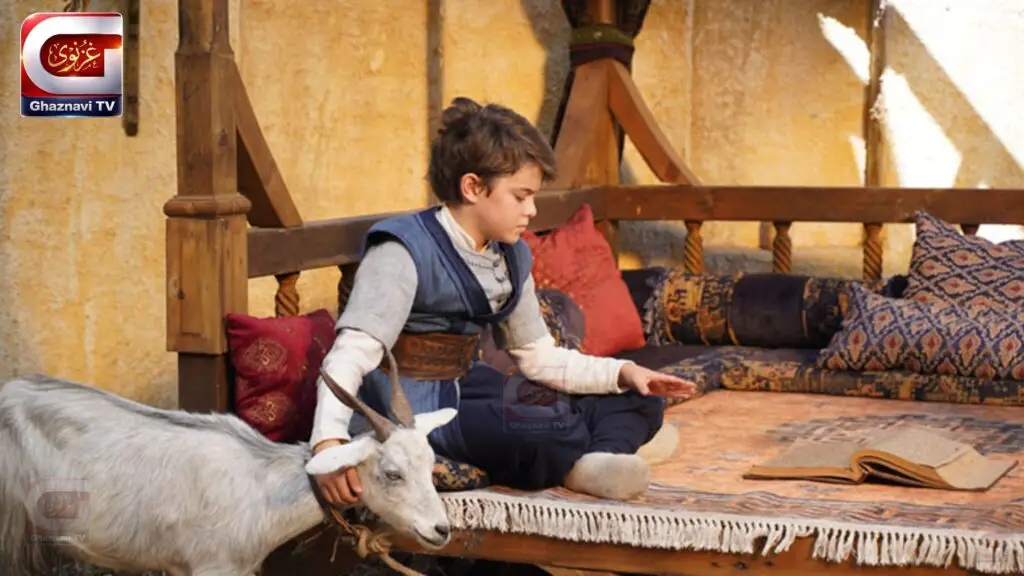
This distinction — between asking whether something works and asking why it works — is one of the most important intellectual distinctions in the history of science. Answers to the second question have vastly more generative power than answers to the first, because they produce principles that can be applied beyond the specific case that generated them. Young Sina’s consistent preference for the second kind of question is one of the most historically accurate and most intellectually significant features of his portrayal in Episode 8.
What the Natural World Looks Like to a Mind Like His
The Bukhara that young Sina moves through in Ibn Sina Episode 8 Urdu Dubbed is, for him, a living laboratory — a world of natural substances, natural processes, and natural interactions that are all, in principle, understandable and that all carry potential medical relevance. The herbs in a market stall, the plants growing in a garden, the specific way a person’s body responds to particular environmental conditions — all of these are sources of data for a mind that is continuously asking what they reveal about how the world works.
This quality of seeing the natural world as a text to be read — as something that carries meaningful information for the attentive observer — is one of the defining characteristics of the scientific mind at its most genuinely developed. And Episode 8 shows it operating in young Sina with a naturalness and a depth that makes the eventual achievements of the adult Ibn Sina feel genuinely continuous with this childhood formation.
Herbs as the Connection Between Natural Philosophy and Medical Practice
What Ibn Sina Episode 8 Urdu Dubbed shows particularly clearly in its pharmacological dimension is the specific connection between natural philosophy — the theoretical understanding of how the natural world is structured — and practical medical application. For the historical Ibn Sina, as for his predecessors in the Islamic and Greek philosophical traditions, these two domains were not separate. Understanding herbs required understanding nature, and understanding nature required understanding the philosophical principles that governed how it was organized. Episode 8 shows young Sina beginning to operate at exactly this intersection — and the result is a form of medical thinking that is already more sophisticated than most of what his formal instruction has provided.
Calm Logic as the Unchanging Foundation of Everything He Does
Throughout Ibn Sina Episode 8 Urdu Dubbed, the logical reasoning that has been developing across the season operates with a quality that is its most fully matured expression: complete calm. Not the calm of someone who does not feel the pressure of a difficult situation, but the calm of someone whose engagement with difficulty has always been mediated by the same careful, structured, evidence-respecting process regardless of the stakes attached to it.
This calm consistency — the fact that his logical discipline does not waver under pressure, that he applies the same quality of reasoning to situations that carry high emotional stakes as to situations that carry none — is one of the most important qualities a scientific or philosophical mind can possess. And it is depicted in Episode 8 with the kind of specificity that makes it feel genuinely real rather than idealized.
Logic That Does Not Change With Emotion
One of the specific things that Ibn Sina Episode 8 Urdu Dubbed shows about young Sina’s logical reasoning is its emotional independence — its ability to maintain the same quality of careful, structured engagement regardless of how emotionally invested he is in a particular outcome. When he genuinely wants a specific answer to be true, his logical process does not bend toward that answer. It evaluates the evidence honestly — and if the evidence says something different from what he hoped, he follows the evidence.
This emotional independence of reasoning is genuinely rare and genuinely important. Most people’s logic bends, at least somewhat, in the direction of what they want to be true. Young Sina’s does not — not because he is emotionally uninvested in outcomes, but because his logical discipline has been trained to the point where it operates independently of his emotional state. Episode 8 shows this independence operating under conditions that test it genuinely — and finding it fully intact.
The Specific Logical Problem That Episode 8 Centers
The central logical challenge in Ibn Sina Episode 8 Urdu Dubbed is one that requires a specific kind of reasoning that earlier episodes have been building toward but have not yet required in quite this form: the reasoning required to identify when a chain of apparently valid inferences has gone wrong, and to trace back through the chain to find the specific point at which a valid inference gave way to an invalid one.
This kind of meta-logical reasoning — reasoning about reasoning rather than simply reasoning — is one of the most sophisticated intellectual capabilities the series has depicted. And the fact that young Sina can engage with it by Episode 8, applying it to a specific situation with genuine effectiveness, is one of the clearest demonstrations of how far his logical development has progressed across the season.
Calm Logic as a Gift to Everyone Around Him
What Ibn Sina Episode 8 Urdu Dubbed shows particularly clearly is that young Sina’s calm logical reasoning is not simply a personal intellectual capability. It is a gift to the people around him — a resource that becomes available to them when they engage with him on difficult questions. His ability to maintain clear, careful thinking under pressure changes the intellectual environment in which everyone he works with operates, elevating the quality of collective thinking in ways that benefit outcomes beyond what any individual could achieve alone.
Quran Study That Has Become the Compass of His Entire Intellectual Life
The relationship between young Sina’s Quranic engagement and his intellectual work reaches its most complete expression in Ibn Sina Episode 8 Urdu Dubbed — an expression that is both the most historically accurate and the most personally beautiful the series has offered. By Episode 8, the Quran is not something young Sina studies alongside his other subjects. It is the compass by which his entire intellectual life is oriented — the source of the fundamental commitments that give direction to everything else he pursues.
This compass function is not about specific answers to specific questions. The Quran does not tell young Sina what herbs to use for which illnesses, or which logical principle applies to a specific inferential challenge. What it provides is something more fundamental: the conviction that reality is ordered and comprehensible, the obligation to engage with it as honestly and as thoroughly as possible, and the moral framework within which the understanding gained through inquiry is applied in service of human wellbeing.
Memorization That Has Become Understanding
One of the most specific developments visible in young Sina’s Quranic engagement in Ibn Sina Episode 8 Urdu Dubbed is the shift from the kind of careful, attentive memorization that has characterized his Quranic study throughout the season to something deeper: a relationship with the text that is genuinely interpretive, that engages with what it means rather than simply with what it says. This shift — from memorization to understanding — is one of the most important transitions in any serious engagement with a sacred text, and the series depicts it with the care and the honesty it deserves.
The Verse That Episode 8 Returns to Repeatedly
There is a specific Quranic engagement in Ibn Sina Episode 8 Urdu Dubbed that the episode returns to at different points in the narrative — a verse that young Sina keeps finding relevant to the different dimensions of what he is working through. Each time he returns to it, he finds something slightly different — a different facet of its meaning becoming visible in the light of where his inquiry has arrived. This iterative engagement with a text — finding new meaning in familiar words through the specific context of new experience — is one of the most authentic depictions of genuine Quranic engagement that the series has offered.
What This Engagement Means for Muslim Viewers
For Muslim viewers watching Ibn Sina Episode 8 Urdu Dubbed on Ghaznavi TV, the Quranic engagement depicted in this episode carries the specific quality of recognition — the recognition of a way of relating to the Quran that is both ancient and alive, that connects this specific child in 10th-century Bukhara to a continuous tradition of Islamic learning that extends from his time to theirs. That recognition is one of the most valuable gifts that historical drama can offer — and the series delivers it with the warmth and the accuracy it deserves.
Good Character That Has Proven Itself Consistently Across Eight Full Episodes
By Ibn Sina Episode 8 Urdu Dubbed, young Sina’s character is no longer something that needs to be established or demonstrated. It is something that has been proven — confirmed across eight episodes of specific situations, specific choices, and specific pressures — and that now carries the specific weight of evidence rather than assertion. When he acts with honesty or fairness or genuine care in Episode 8, the viewer does not experience it as a character moment. They experience it as the confirmation of something they already know to be true about this person.
This is one of the specific achievements of serialized storytelling done well: the accumulated proof that a character’s demonstrated qualities are genuine rather than performed. Young Sina’s good character in Episode 8 has the weight of eight episodes of evidence behind it — and that weight makes every expression of it in this episode carry far more than it would in a standalone story.
Honesty Under Genuine Pressure
The specific ethical test that Ibn Sina Episode 8 Urdu Dubbed applies to young Sina’s honesty is genuinely demanding — a situation where telling the truth requires accepting a specific and real cost, where the comfortable version of events would be available and would not be obviously detectable as dishonest. His choice to tell the truth anyway — not with evident struggle, but simply because it is what he does — confirms what eight episodes have already established about who he is.
Fairness That Does Not Play Favorites
Young Sina’s sense of fairness in Ibn Sina Episode 8 Urdu Dubbed is tested in a specific and humanly recognizable way: in a situation where someone he cares about is involved, where the fair outcome is not the outcome that serves his personal attachment. His ability to maintain his commitment to fairness even in this kind of situation — to apply the same standard regardless of who is affected by it — is one of the most important expressions of genuine moral character. And Episode 8 shows it operating with the naturalness of something that has long since become a settled feature of who he is.
Why Intelligence and Good Character Must Always Go Together
The central moral argument of Ibn Sina Episode 8 Urdu Dubbed — and of the entire series — is not simply that young Sina is intelligent. It is that his intelligence has value because it is guided by good character. Brilliant intelligence without good character produces someone who can do harm as effectively as good. Brilliant intelligence guided by honesty, fairness, and genuine care for others produces someone who can genuinely benefit the world. The series has been making this argument across eight episodes — and Episode 8 states it most clearly by showing both dimensions fully developed and fully integrated in a single person and a single moment.
The Islamic Golden Age Shown Simply, Beautifully, and With Complete Respect
One of the consistent achievements of Ibn Sina Episode 8 Urdu Dubbed — and of the series as a whole — is its visual and cultural depiction of the Islamic Golden Age: specific enough to be historically honest, simple enough to be immediately accessible to viewers of any age or background, and warm enough to feel like a living world rather than a museum exhibit.
By Episode 8, the visual language of 10th-century Bukhara has become so familiar to regular viewers that it no longer requires any effort to inhabit. The traditional architecture, the handwritten manuscripts, the specific textures of clothing and furnishing, the rhythms of market life and learning life — all of these have accumulated into a world that the viewer genuinely lives in during the viewing experience, rather than simply observing from a comfortable distance.
Architecture That Tells a Story About Values
The specific architecture visible in Ibn Sina Episode 8 Urdu Dubbed — the mosques, the learning circles, the domestic spaces, the market structures — tells a story about the values of the civilization that built it. These are spaces designed for community and learning, for the integration of religious life and intellectual life, for the kind of shared human activity that the Islamic Golden Age at its best consistently produced. Episode 8 uses these spaces with the same care it has always brought to the physical environment — as meaning rather than simply as backdrop.
Learning Circles as the Heart of the Community
Among the visual elements of the Islamic Golden Age that Ibn Sina Episode 8 Urdu Dubbed depicts with particular care are the learning circles — the informal but serious gatherings of scholars and students that were one of the primary institutions of knowledge transmission in this period. These are not formal classrooms. They are communities of inquiry — spaces where knowledge flows in multiple directions, where students become teachers of specific things they have understood, where the boundaries between formal instruction and collaborative exploration are fluid and productive.
Young Sina’s participation in these learning circles by Episode 8 has evolved significantly from his early appearances in them. He is no longer simply a student receiving instruction. He is a participant — someone whose contributions to the collective inquiry of the group are substantive and recognized as such by everyone present.
What This World Says to Young Viewers
For young viewers watching Ibn Sina Episode 8 Urdu Dubbed on Ghaznavi TV, the visual world of the series communicates something that is more important and more durable than any specific piece of historical information: that the Islamic tradition has always valued learning, has always understood curiosity as a virtue, has always seen the pursuit of knowledge as compatible with — indeed, required by — the deepest commitments of faith. This is a message that matters for how young Muslim viewers understand their own tradition and their own place within it.
How Episode 8 Sets the Stage for the Season’s Final Two Episodes
By the conclusion of Ibn Sina Episode 8 Urdu Dubbed, the stage for the season’s final two episodes is set with a clarity and a specificity that creates the most genuine anticipation the season has yet produced. Not the anxious anticipation of a cliffhanger, but the deeper anticipation of a story that has proven it can be trusted — that has delivered consistently on what it promised and that shows every sign of continuing to do so through to its completion.
The specific things that Episode 8 leaves open for Episodes 9 and 10 are not arbitrarily withheld plot points. They are the threads that genuinely cannot be concluded until the character and the story have arrived at the specific place where they can be concluded with the full weight they deserve. Episode 8 gets everyone to that place — and leaves viewers genuinely, confidently eager for what remains.
The Threads That Will Complete in the Final Two Episodes
Several specific threads from Ibn Sina Episode 8 Urdu Dubbed will find their completion in Episodes 9 and 10: the medical understanding that has been growing toward its season-defining test; the father-son relationship that has been one of the season’s most consistently beautiful dimensions; the community of Bukhara that has been as much a character as any individual in the series; and the specific integration of faith, reason, and compassion that has been the season’s central achievement and that the finale must honor with full dignity.
What the Finale Needs to Be
The finale of Season 1 that Ibn Sina Episode 8 Urdu Dubbed is now setting up needs to do something specific: it needs to feel complete in itself while also suggesting, without forcing, the extraordinary adult that this extraordinary child will become. Not by jumping forward to show the adult, but by showing the child at the point where the direction of his growth is clear and inevitable — where the reader or viewer can see, with genuine confidence, where this particular person is going. Episode 8 has brought the story to the edge of that point. Episodes 9 and 10 will take it there.
Why This Season Has Been Worth Every Episode
For viewers who have followed Ibn Sina Episode 8 Urdu Dubbed and its predecessors from the beginning, the anticipation created by Episode 8’s conclusion is the specific kind that only genuinely well-made serialized storytelling generates: the anticipation of someone who knows a story can be trusted, who has experienced what it is capable of delivering, and who is genuinely looking forward to seeing what it does with what it has built. That anticipation is itself the measure of how well the season has been made — and by that measure, it has been made very well indeed.
Watch Ibn Sina Episode 8 Urdu Dubbed Free on Ghaznavi TV
Ibn Sina Episode 8 Urdu Dubbed is available right now — completely free — on Ghaznavi TV at www.ghaznavitv.site. HD quality Urdu dubbing, smooth streaming on any device, all ten episodes of Season 1 available. No registration. No payment. No waiting.
Two episodes from the end of one of the most genuinely meaningful series available for Muslim families — and the story is at its most complete and most alive. This is exactly the moment to keep watching.
🌐 Watch Free Now: www.ghaznavitv.site | Ibn Sina Episode 8 Urdu Dubbed | All 10 Episodes | HD | Free
⬇ Download Full HD
What happens in Ibn Sina Episode 8 Urdu Dubbed?
Episode 8 is set two episodes before the Season 1 finale and shows young Sina operating with all of his accumulated capabilities at their most fully integrated and most completely developed. The episode centers on a medical mystery that requires exactly the combination of observation, logic, pharmacological knowledge, and moral judgment that eight episodes have built — and on the specific resolutions and setups that position the season for its closing two episodes.
Where can I watch Ibn Sina Episode 8 Urdu Dubbed for free?
Watch it completely free on Ghaznavi TV at www.ghaznavitv.site. HD quality Urdu dubbing, all ten episodes of Season 1 available — no account or payment required.
How has young Sina’s curiosity changed by Episode 8?
By Episode 8, young Sina’s curiosity has transformed from a natural impulse into something closer to a vocation — a deliberate, committed, purposefully directed orientation toward understanding that operates consistently regardless of difficulty or resistance. It is no longer simply how he is built. It is how he has chosen to be — a choice that carries moral weight and that distinguishes his pursuit of knowledge as a genuine life commitment rather than simply an intellectual tendency.