

Ibn Sina Episode 4 Urdu Dub is now streaming free on Ghaznavi TV. Something is different about this episode compared to the three that came before it. The challenges young Sina has faced so far have stretched him — but this one pushes him into genuinely new territory. Not because it is harder in a simple sense. But because solving it will require him to use everything he has learned in ways he has never quite combined before. And watching that combination happen, for the first time, is one of the most genuinely satisfying things this series has offered.
Watch Ibn Sina Episode 4 Urdu Dub

For Download Please Scroll on bottom👇
Table of Contents
Table of Contents
Why Ibn Sina Episode 4 Urdu Dub Feels Like a Genuine Leap Forward
Ibn Sina Episode 4 Urdu Dub marks a point in the series where the cumulative effect of everything the previous episodes built becomes visible in a new and specifically satisfying way. Episodes 1, 2, and 3 each developed something in young Sina — his habits of observation, his methods of reasoning, his relationships with the teachers and family members who are shaping his early development. Episode 4 is where those developed capacities meet a situation that requires all of them at once.
The result is an episode that feels more integrated than its predecessors — where the different dimensions of young Sina’s character are not on display one at a time, but are genuinely working together in real time. His curiosity drives the initial engagement. His logical discipline shapes how he approaches it. His ethical commitments determine what he does with what he finds. And his relationships — with his father, his teachers, the community around him — provide both the context and the resources that make his approach possible.
A Character Who Has Grown Visibly Between Episodes
Viewers who have been watching Ibn Sina Episode 4 Urdu Dub and its predecessors on Ghaznavi TV will notice something specific about young Sina in this episode: he is observably more confident in his own methods than he was in Episode 1. Not arrogantly confident — he still approaches each new situation with genuine humility about what he does not yet know. But there is a quality of trust in his own process that was not present in the earlier episodes, and that trust changes how he engages with challenges in ways that are immediately visible.

This kind of growth — the development of a genuine working confidence in one’s own methods — is one of the most important forms of intellectual development, and the series depicts it with the specific accuracy that comes from genuinely understanding what it is. It is not the confidence of someone who thinks they know everything. It is the confidence of someone who has learned that their way of approaching problems, when applied patiently and honestly, tends to produce results. That distinction is crucial, and Ibn Sina Episode 4 Urdu Dub captures it beautifully.
The Specific Quality That Makes This Episode Stand Apart
What distinguishes Episode 4 from the earlier episodes is not primarily its plot complexity or its production quality — both of which are consistent throughout the series. It is the specific quality of integration it achieves between the different threads of young Sina’s story. In this episode, nothing feels separate. His intellectual work is connected to his values. His values are expressed through his relationships. His relationships provide the meaning that motivates his intellectual work. The circle is closed in Episode 4 in a way that makes the episode feel genuinely complete rather than simply satisfying.
What This Episode Means for the Remaining Six Episodes of Season 1
By the time Ibn Sina Episode 4 Urdu Dub ends, the series has established a new baseline for what young Sina is capable of — a baseline that the remaining six episodes of the season will build on. Each challenge he faces from this point forward will draw on the integration that Episode 4 has demonstrated, pushing it further and testing it in new contexts. Viewers who appreciate what this episode achieves will find the rest of the season even more rewarding for having understood this turning point clearly.
The Challenge That Changes How He Sees Himself
The specific challenge at the center of Ibn Sina Episode 4 Urdu Dub is designed, with evident intentionality, to push young Sina past what his existing knowledge can comfortably handle. Previous episodes gave him challenges that were demanding but ultimately within the reach of capabilities he had already demonstrated. This episode gives him something that requires a step beyond — a situation where his established methods produce partial answers but not complete ones, where he must extend his thinking into territory he has not previously mapped.
This design is not accidental. It reflects something important about how genuine learning actually happens: not through the repeated successful application of already-mastered skills, but through encounters with situations that require those skills to be extended in new directions. The challenge in Episode 4 creates exactly this kind of encounter — and young Sina’s response to it shows exactly what it looks like when a genuinely exceptional mind meets a genuinely demanding problem.
The Moment He Realizes His First Answer Was Incomplete
One of the most valuable moments in Ibn Sina Episode 4 Urdu Dub is the specific scene where young Sina realizes that the answer he arrived at through his initial reasoning is not wrong exactly — but is incomplete in a way that matters. This realization does not produce panic or defensiveness. It produces a specific kind of focused attention: the attention of someone who now understands that the problem is deeper than they initially assessed, and who is genuinely interested in finding out how deep it actually goes.
This response — curiosity rather than defensiveness in the face of incompleteness — is one of the defining qualities of genuinely excellent scientific and philosophical thinking. Most people, when they discover that their initial answer was incomplete, defend it or deflect. Young Sina leans into the incompleteness, using it as a guide toward the fuller understanding he has not yet reached. The episode shows this response with the kind of naturalness that suggests it has become genuinely habitual for him.
The Specific Skills Episode 4’s Challenge Requires
What makes the challenge in Ibn Sina Episode 4 Urdu Dub particularly well-designed from a narrative standpoint is that it requires exactly the combination of skills the series has been developing across the previous three episodes. It requires careful observation — established in Episode 1. It requires methodical reasoning — developed in Episode 2. It requires the willingness to revise initial conclusions when evidence demands it — demonstrated in Episode 3. And it requires something new: the ability to synthesize insights from different domains of knowledge into a single integrated understanding. Episode 4 introduces this synthesizing capacity for the first time — and the episode’s challenge is what creates the necessity for it.
What Successfully Meeting This Challenge Does for Young Sina’s Confidence
The outcome of the challenge in Ibn Sina Episode 4 Urdu Dub does something important for young Sina that goes beyond the immediate satisfaction of solving a difficult problem. It gives him evidence — concrete, specific, personally experienced evidence — that his way of approaching problems can handle things that initially seem to be beyond what it can handle. That evidence becomes the foundation of the working confidence that will sustain him through the increasingly difficult challenges the remaining episodes will present.
Building Something Real – When Theory Meets the Physical World
Among the most engaging elements of Ibn Sina Episode 4 Urdu Dub is young Sina’s continued engagement with invention — the specific activity of building something physical that embodies a principle he has understood theoretically. Previous episodes have shown him engaging with invention, but Episode 4 takes this dimension of his character to a new level. The invention in this episode is more sophisticated than what came before, and the process of its development is shown with more detail and more honest depiction of what invention actually involves.
Invention, as shown in this episode, is not the sudden materialization of a complete idea. It is a process of iteration — of building something that approximately embodies your initial understanding, testing it against reality, discovering the ways in which reality differs from your model of it, and revising both the object and the model until they are adequately aligned. This process is shown in Episode 4 with the specific texture of how it actually works — including the frustration of the iterations that do not work and the specific satisfaction of the one that finally does.
The Connection Between Hands and Mind
What Ibn Sina Episode 4 Urdu Dub shows particularly well about young Sina’s inventive work is the specific relationship between physical manipulation and conceptual understanding. When he builds something — when he actually handles materials, assembles components, and watches the result behave in the physical world — he learns things about the underlying principles that pure theoretical reasoning would not have shown him. The physical world pushes back in ways that thought experiments do not, and those pushbacks reveal aspects of reality that only become visible through direct engagement.
This is historically accurate to how the young Ibn Sina actually developed: through a combination of theoretical study and direct engagement with the physical world that was, for its era, unusually balanced. The series honors this balance by giving equal weight to his thinking and his making — showing them as complementary rather than separate activities.
Why Invention Is the Best Demonstration of Understanding
There is a principle in education that genuine understanding of something is demonstrated when you can build it — when you can take the principle from the abstract into the concrete without losing its essential character in the translation. Young Sina’s inventive work in Ibn Sina Episode 4 Urdu Dub is the clearest possible demonstration that his understanding of the principles he has been studying is genuine rather than superficial. He is not simply repeating what he has been taught. He is applying it — in a new context, to a new purpose, with results that would not have been possible without genuine comprehension.
What This Teaches Children Who Watch It
For young viewers watching Ibn Sina Episode 4 Urdu Dub on Ghaznavi TV, the invention sequence in this episode offers something genuinely valuable: a realistic and respectful portrayal of what creative making actually involves. It shows that building something real requires thinking, persistence, the willingness to fail and try again, and the intellectual honesty to revise your model when your first attempt reveals something your model did not account for. These are exactly the qualities that the most valuable forms of adult work — in science, in engineering, in medicine — require. And showing them operating in a child’s context makes them accessible and inspirational in a way that adult examples rarely achieve.
Logic That Goes Beyond What He Was Taught to a Place He Found Himself
By Ibn Sina Episode 4 Urdu Dub, young Sina’s engagement with logic and philosophical reasoning has reached a stage that is noticeably different from the early episodes. In the beginning, he was learning logic — absorbing the frameworks and principles that his teachers presented to him. In Episode 4, he is using logic — applying it to problems his teachers did not specifically design it to solve, extending it into territory his formal instruction has not mapped, and occasionally arriving at conclusions that surprise even himself.
This transition — from learning a tool to genuinely wielding it — is one of the most important developmental thresholds in any kind of intellectual formation. On one side of the threshold, knowledge belongs to your teachers. On the other side, it belongs to you. Episode 4 shows young Sina crossing that threshold in real time, and it is one of the most genuinely moving things the series offers.
When His Reasoning Takes Him Somewhere His Teachers Have Not Been
There is a specific moment in Ibn Sina Episode 4 Urdu Dub where young Sina’s chain of reasoning takes him to a conclusion that his teacher had not anticipated — a conclusion that is not only correct but that reflects a level of synthesis and insight that goes beyond what the instruction he has received would be expected to produce. The teacher’s response to this moment is one of the episode’s most carefully handled character beats: genuine recognition, without defensiveness, of a student who has taken the materials of his education and done something with them that the teacher himself had not thought of.
This kind of moment — where the student demonstrates that they have genuinely absorbed and extended rather than merely memorized — is the highest reward that a teacher can receive. And the episode handles it with the specific warmth and honesty that characterizes the best teacher-student relationships in the series.
Logic as a Path to Both Truth and Compassion
One of the distinctive qualities of young Sina’s reasoning in Episode 4 is that it never becomes purely abstract or disconnected from the human realities it is addressing. His logical work is always in service of understanding something specific about the world that matters in terms of real people’s lives — a problem that has consequences for specific individuals, a question whose answer will change how someone is helped or cared for. This orientation toward the human stakes of intellectual work is one of the things that makes his logic feel like wisdom rather than simply cleverness.
The Philosophical Foundations That Make This Possible
The specific quality of logical reasoning that young Sina demonstrates in Ibn Sina Episode 4 Urdu Dub is grounded in the Islamic philosophical tradition he is being trained in — a tradition that understood logic not as an end in itself but as a tool in service of understanding reality as it is actually structured, not as we might wish it to be. This grounding in a specific philosophical tradition gives his reasoning a specific character — systematic, reality-oriented, and always responsive to what the evidence actually shows rather than what the argument would be tidier if it showed.
His Growing Understanding of Sickness — Asking Why When Others Only Ask What
The medical dimension of young Sina’s curiosity has been present throughout the series, but Ibn Sina Episode 4 Urdu Dub develops it in a new and specifically significant way. Where earlier episodes showed him noticing patterns in illness and asking questions about them, Episode 4 shows him beginning to develop something closer to a theoretical framework — a way of thinking about the body as a system whose different components interact, and whose disruptions produce effects that can, in principle, be understood rather than simply observed.
This shift from observation to theory is enormous in its implications. A practitioner who can only observe knows that certain treatments seem to help with certain conditions. A practitioner who can theorize about why those treatments help can begin to reason about what other treatments might work in similar ways, can begin to develop new approaches from first principles rather than only from accumulated experience, can begin to build the kind of systematic knowledge that the Canon of Medicine will eventually represent.
The Specific Medical Questions Episode 4 Raises
The medical questions that young Sina engages with in Ibn Sina Episode 4 Urdu Dub are chosen with the same careful developmental awareness that characterizes the series’ approach to his intellectual growth throughout. They are questions that are genuinely interesting and genuinely difficult, but that are also genuinely addressable using the combination of observation, logical reasoning, and creative inference that he has been developing. They stretch him without breaking him — and the specific insights he arrives at in engaging with them are insights that feel genuinely earned rather than provided.
When Compassion Drives Inquiry
What gives young Sina’s medical curiosity its specific character in Episode 4 is its connection to compassion. He is not studying illness because it is an interesting intellectual puzzle — though it is that. He is studying it because people he cares about, and people he sees suffering around him, would benefit from a better understanding of what is happening to them and what can be done about it. This compassion-driven orientation toward medical knowledge is historically accurate to the figure of the adult Ibn Sina, whose medical work was always understood by him as being fundamentally in service of alleviating suffering.
Early Seeds of the Canon of Medicine
The specific quality of young Sina’s medical thinking in Ibn Sina Episode 4 Urdu Dub makes visible the earliest seeds of what will eventually become the Canon of Medicine — the encyclopedic medical text that the adult Ibn Sina would produce and that would serve as a standard medical textbook in Europe and the Islamic world for over six centuries. The systematic approach, the integration of theoretical principles with practical observation, the commitment to understanding causes rather than simply cataloguing effects — all of these are present in embryonic form in the young boy we watch in Episode 4. Knowing where he is going makes watching where he is now feel genuinely significant.
Faith, Learning, and the Living Connection He Keeps Finding Between Them
One of the most consistent and most beautifully handled dimensions of Ibn Sina Episode 4 Urdu Dub is the relationship between young Sina’s Quranic study and his scientific and philosophical investigations. Rather than existing in separate compartments of his intellectual life, these domains are shown — as they were in earlier episodes, but with greater depth in Episode 4 — as genuinely informing and enriching each other.
His engagement with the Quran in Episode 4 is not rote memorization or ritual performance. It is genuine reading — the kind of reading that looks for meaning, that asks what the text is actually saying about the nature of reality and the correct way to engage with it. And what it consistently returns to him, in the specific verses and passages that appear in this episode, is an understanding of the created world as something that rewards careful, sustained, honest attention.
The Verse That Changes How He Approaches the Current Problem
There is a specific moment in Ibn Sina Episode 4 Urdu Dub where a verse young Sina has been studying connects, unexpectedly but undeniably, to the specific problem he has been wrestling with. The connection is not forced — it arises naturally from genuinely thinking about both the verse and the problem at the same time, which is what happens when a person truly lives in both worlds simultaneously rather than keeping them separated by schedule and context.
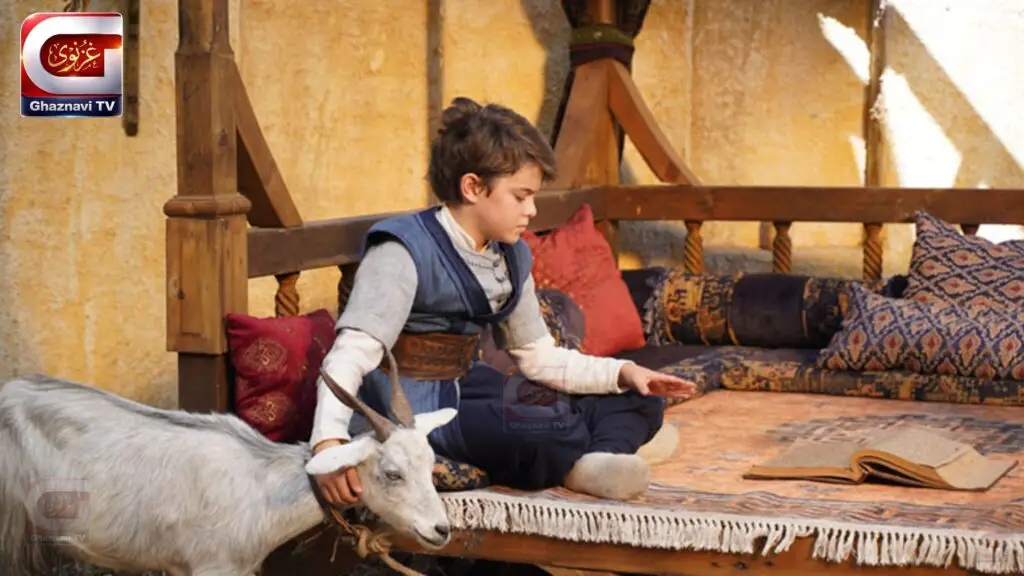
This moment is one of the most spiritually honest things the series has offered — a depiction of how genuine integration between faith and inquiry actually works, not as a formal synthesis worked out by academic theologians, but as the lived experience of a child who reads the Quran and studies the natural world with the same quality of attention and finds that they keep informing each other.
What This Integration Meant in the Islamic Golden Age
The integration of Quranic study with natural philosophy and scientific investigation that young Sina embodies in Episode 4 reflects the actual intellectual culture of the Islamic Golden Age with historical accuracy. The scholars of this period did not experience a tension between their religious obligations and their scientific work — they experienced them as aspects of a single vocation: the human obligation to understand, to the best of one’s capacity, the creation that God had brought into existence. This understanding drove the extraordinary scientific productivity of the period — and Ibn Sina Episode 4 Urdu Dub shows it operating at the level of one child’s daily experience with remarkable authenticity.
Why This Depiction Matters for Muslim Audiences Today
For Muslim viewers watching Ibn Sina Episode 4 Urdu Dub on Ghaznavi TV, the integration of faith and learning that young Sina embodies offers something genuinely important: a historical demonstration that these two commitments are not in competition, and that the greatest achievements of Islamic civilization were produced by people who held them simultaneously and found them mutually strengthening. This is a message worth hearing clearly — particularly for younger Muslim viewers who may encounter cultural narratives suggesting that scientific and intellectual seriousness requires distance from religious commitment.
Kindness That He Practices Even When Nobody Is Watching
The ethical dimension of young Sina’s character has been present throughout the series, but Ibn Sina Episode 4 Urdu Dub develops it in a way that is specifically notable: it shows his kindness operating in situations where it would be entirely unnoticed if he chose to withhold it. The moral choices he makes in Episode 4 are not public gestures or dramatic demonstrations of virtue. They are small, private choices — made in moments when no one who matters is watching, when the easier course of action would have gone without remark.
This specific quality — kindness as a private practice rather than a public performance — is one of the marks of genuine character as opposed to performed virtue. It means the values are genuinely his own rather than responses to social expectation. And it is depicted in Episode 4 with the kind of casualness that is its own form of authenticity: young Sina does not appear to experience these moments as moral struggles. He simply does what he believes is right, without apparent internal conflict, because doing so has become natural to him.
Fairness Even When It Costs Him Something
One specific instance in Ibn Sina Episode 4 Urdu Dub shows young Sina choosing fairness in a situation where it costs him something tangible — not a large sacrifice, but a real one. He takes a position or makes a choice that benefits someone else at some small cost to himself, not because it will be rewarded or recognized, but because his assessment of the situation makes the just course of action clear to him and he follows it without elaborate justification.
This kind of small, unconsidered fairness — fairness as a default rather than a deliberate decision — is a more reliable indicator of genuine moral character than any number of large, dramatic sacrifices made under public scrutiny. Episode 4 honors it with the attention it deserves.
The Responsibility He Feels Toward People He Has Helped
By Episode 4, young Sina has helped enough people — through his observations, his reasoning, his small inventions and interventions — to have developed a genuine sense of responsibility toward them that extends beyond the immediate interaction. He checks on outcomes. He follows up. He remains attentive to whether the help he offered actually helped, and is prepared to revise his understanding if it did not.
This ongoing responsibility — this refusal to consider his involvement in someone’s situation complete until he has actually verified that they are better off — is the specific quality that will eventually make the adult Ibn Sina’s medical practice genuinely effective rather than simply learned. It is the difference between someone who gives advice and someone who actually helps. Ibn Sina Episode 4 Urdu Dub shows it developing in exactly the right way and at exactly the right stage of his formation.
The Moral Life as an Integrated Practice
What is most impressive about the ethical portrayal of young Sina in Episode 4 is its integration — the way his moral commitments are not separate from his intellectual work but are woven through it at every point. His honesty shapes how he approaches evidence. His fairness shapes how he treats the people who are affected by his conclusions. His compassion shapes which questions he chooses to pursue. The moral and the intellectual are not two separate aspects of his character. They are one thing, expressed differently in different contexts. This integration is one of the most important things the series communicates about what made the historical Ibn Sina not just brilliant but great.
The World of Bukhara in Episode 4 – History You Can Actually Feel
The physical world of 10th-century Bukhara that Ibn Sina Episode 4 Urdu Dub depicts has become, by this fourth episode, something more than a setting. It has become a character — one with its own specific rhythms, its own qualities of light and texture and social atmosphere, its own ways of communicating the specific character of the civilization it represents.
Episode 4 shows Bukhara in ways that are specifically appropriate to the stage of young Sina’s development that the episode depicts. The learning spaces he inhabits are shown with more detail than in earlier episodes — reflecting both his growing familiarity with them and the viewer’s accumulating understanding of the world he moves through. The social dynamics of the community are given more texture — the relationships between scholars, between families, between the different social roles that structure daily life in this specific place at this specific time.
Architecture and Learning Culture That Reflect Each Other
One of the subtle but important things that Ibn Sina Episode 4 Urdu Dub communicates through its visual design is the relationship between the physical spaces of learning in Bukhara and the learning culture those spaces embody. The places where knowledge is transmitted and created in this world are not hidden away or separated from daily life. They are integrated into the community — accessible, respected, and understood as central rather than peripheral to what makes the city what it is.
This physical integration reflects the cultural integration that made the Islamic Golden Age possible: a civilization in which the pursuit of knowledge was understood as a fundamentally human and fundamentally religious activity, deserving of the best physical and social conditions that the community could provide.
The Specific Texture of 10th-Century Urban Life
The daily life visible in the background of Ibn Sina Episode 4 Urdu Dub — the market interactions, the household rhythms, the specific way that public and private space is organized — is depicted with the kind of historical care that respects the specificity of the time and place without turning it into a museum exhibit. People in Bukhara in 980 CE were living their lives, not performing their history. The series captures this quality of ordinary life inside an extraordinary civilization with a lightness of touch that keeps the historical detail from feeling heavy.
What Seeing This World Accurately Teaches Viewers
For viewers — particularly younger ones — watching Ibn Sina Episode 4 Urdu Dub on Ghaznavi TV, the accurate depiction of 10th-century Bukhara offers something that textbooks rarely provide: a sense of what a great Islamic civilization actually felt like to live inside. Not as an abstraction or a list of achievements, but as a real place where real people went about their daily lives, raised their children, pursued their knowledge, and built the things that history would eventually record. That sense of reality is one of the most valuable gifts historical drama can give.
His Parents in Episode 4 – Support That Has Learned to Step Back
The relationship between young Sina and his parents in Ibn Sina Episode 4 Urdu Dub has continued to evolve in ways that reflect both his development and theirs. By this fourth episode, his parents have developed a more settled understanding of what kind of support their son actually needs — and that understanding has produced a shift in how they offer it.

In earlier episodes, their support was necessarily more active: more hands-on involvement in his learning, more direct engagement with the challenges he was facing. By Episode 4, they have begun to learn one of the hardest things a parent of an exceptional child must learn: when to step back. When the most supportive thing is not to help but to trust — to create the space in which their son can encounter and overcome difficulty on his own terms, developing through the experience rather than being protected from it.
A Father Who Has Learned to Ask Different Questions
The conversations between young Sina and his father in Ibn Sina Episode 4 Urdu Dub have a different quality from those in earlier episodes. The father’s questions have changed — they are less about what young Sina is learning and more about how he is thinking. Less about the outcomes of his investigations and more about the process he is using to conduct them. This shift reflects a deepened understanding of what his son’s development actually requires: not more information, but more sophisticated engagement with how he is building his capacity to work with information.
His Mother’s Specific Form of Encouragement
Young Sina’s mother in Episode 4 demonstrates the specific form of encouragement that is most valuable at this stage of his development: the encouragement that comes from genuine confidence rather than anxious reassurance. She does not tell him he can do it because she needs him to succeed. She tells him he can do it because she has watched him work through difficult things before and has developed a real, evidence-based confidence in his capacity to work through this one. The difference is palpable — and it is exactly the difference between the kind of parental encouragement that produces genuine resilience and the kind that produces only performed confidence.
Parenting as a Practice of Ongoing Adjustment

What Ibn Sina Episode 4 Urdu Dub ultimately shows about young Sina’s parents is that they are practicing parenting as an ongoing process of adjustment — continuously updating their understanding of what their son needs and revising their approach accordingly. They are not following a fixed script. They are responding to who he actually is, as that becomes progressively more clear to them. This quality of responsive, adaptive parenting is one of the most honest and most valuable things the series offers — both as a portrayal of this specific family and as a model for parents watching.
A Teacher Who Finally Meets His Real Match in Episode 4
Among the teachers in young Sina’s life during Ibn Sina Episode 4 Urdu Dub, there is a specific figure whose role in this episode is particularly significant — a scholar whose depth of knowledge has always previously been sufficient to keep ahead of young Sina’s questions, and who in Episode 4 encounters, for the first time, a moment where that depth is genuinely tested by his remarkable student.
This moment — when a teacher realizes that the student sitting before them has arrived at a question that the teacher’s own knowledge cannot fully answer — can go in two very different directions depending on the quality of the teacher. A fragile teacher becomes defensive, deflects, or finds a way to redirect before the gap becomes visible. A genuinely great teacher recognizes the moment for what it is: evidence that the student has arrived at a genuine frontier of knowledge, and responds with the specific combination of honesty about the limit and encouragement about its significance that the moment requires.

The Response That Defines a Great Teacher
The teacher’s response to this moment in Ibn Sina Episode 4 Urdu Dub is one of the episode’s finest character moments. He does not pretend he has an answer he does not have. He does not diminish the question by suggesting it is premature. He acknowledges honestly that young Sina has arrived somewhere that the teacher’s own knowledge has not fully mapped — and he responds with genuine intellectual excitement about the territory his student has reached rather than discomfort about the limit it reveals in himself.
This response — intellectual generosity in the face of being surpassed by a student — is one of the highest forms of the teaching vocation. And the fact that this specific scholar demonstrates it says something important about the quality of the intellectual culture surrounding young Sina in Bukhara. He is being shaped not just by what his teachers know but by how they respond to the limits of what they know. And that response — curious, honest, encouraging rather than defensive — is one of the most important things he is learning.
What This Moment Means for Young Sina’s Future
The teacher’s response in Episode 4 does something specific for young Sina’s developing sense of where he is headed intellectually. By treating his question with genuine respect — by responding to it as a question that deserves to be pursued rather than one that should be deferred until he is older or more educated — the teacher communicates something that will stay with him: that the frontier of knowledge is real, that it is reachable, and that arriving there is not presumptuous but is exactly what serious intellectual work is supposed to do.
How This Relationship Will Continue to Develop
The relationship between young Sina and this specific teacher, shifted by the moment in Episode 4, will continue to develop in ways that the remaining episodes of Season 1 will explore. The teacher has become, in this episode, not just a mentor but something closer to an intellectual companion — someone who is genuinely curious about where his remarkable student’s thinking is going to take them both. That quality of mutual intellectual engagement, between a teacher who remains genuinely curious and a student who has arrived at genuine depth, is one of the rarest and most productive relationships that the history of learning has produced.
Watch Ibn Sina Episode 4 Urdu Dub Free on Ghaznavi TV
Ibn Sina Episode 4 Urdu Dub is available right now — completely free — on Ghaznavi TV at www.ghaznavitv.site. Clear Urdu dubbing, HD quality, all ten episodes of Season 1 available, smooth streaming on any device. No registration. No payment. No waiting.
This is one of the most genuinely valuable series available for Muslim families and anyone who loves Islamic history. Episode 4 is where it becomes clear that this story is building toward something extraordinary.
🌐 Watch Free Now: www.ghaznavitv.site | Ibn Sina Episode 4 Urdu Dub | All 10 Episodes | HD | Free
: What happens in Ibn Sina Episode 4 Urdu Dub?
Episode 4 presents young Sina with his most demanding challenge yet — one that requires him to synthesize knowledge from multiple domains simultaneously for the first time. The episode develops his inventive work, deepens his medical curiosity, shows him applying logical reasoning in new ways, and depicts a specific moment where a teacher genuinely meets his match. It also continues developing the family relationships and the Bukhara setting with the depth that the series consistently brings to these elements.
Where can I watch Ibn Sina Episode 4 Urdu Dub for free?
Watch it completely free on Ghaznavi TV at www.ghaznavitv.site. HD quality Urdu dubbing, all episodes available — no account or payment needed.
How does Episode 4 build on the previous episodes?
Each of the first three episodes developed specific capacities in young Sina — careful observation, methodical reasoning, and the willingness to revise initial conclusions when evidence demands it. Episode 4 is the first episode that requires all three of these simultaneously, plus the new capacity for synthesis that the episode introduces. It is the point where the series’ cumulative character development produces something qualitatively new.
Ibn Sina Episode 4 Urdu Dub
Ibn Sina Episode 4 Urdu Dub
Ibn Sina Episode 4 Urdu Dub
Ibn Sina Episode 4 Urdu Dub
Ibn Sina Episode 4 Urdu Dub
Ibn Sina Episode 4 Urdu Dub
Ibn Sina Episode 4 Urdu Dub
Ibn Sina Episode 4 Urdu Dub
Ibn Sina Episode 4 Urdu Dub
Ibn Sina Episode 4 Urdu Dub
Ibn Sina Episode 4 Urdu Dub
Ibn Sina Episode 4 Urdu Dub Ibn Sina Episode 4 Urdu Dub
Ibn Sina Episode 4 Urdu Dub
Ibn Sina Episode 4 Urdu Dub





[…] Join WhatsApp ▶ Epiosde 4 […]
[…] WhatsApp ▶ Epiosde 82 TABLE OF […]